Download Feb 2025 PDF file
CALGAROO

A journey into nature

Newsletter of the Parramatta and Hills District Group

Australian Plants Society NSW Ltd

Our vision: inspiring people to admire, grow and conserve native plants
WHAT’S ON IN 2025
| 22 February Saturday 2pm: | Members’ meeting and AGM Gumnut Hall. Speaker Jennifer Farrer “The ANPSA post-conference tour to the Wimmera and Grampians”. |
| 16 February Wednesday 10am: | Propagation |
| 22 March Saturday 2pm: | Members’ meeting Gumnut Hall Speaker Pat Schwartz “Hills-Hornsby Koala project” |
| 26 March Wednesday 10am: | Propagation |
| 23 April Wednesday 10am: | Propagation |
| 26 April Saturday 2pm: | Bushwalk Brush Farm Eastwood. Leader Jennifer Farrer |
| 21 May Wednesday 10am: | Propagation |
| 24 May Saturday: | Bushwalk Waterfall Walk West Pennant Hills. Leader Jennifer Farrer |
| 18 June Wednesday 10am | Propagation |
| 28 June Saturday 2pm: | Members’ meeting Gumnut Hall Speaker Brian Roach “Amazing Greys” |
| 16 July Wednesday 10am: | Propagation |
| 26 July Saturday: | Bushwalk Jones Road Fire Trail Kenthurst |
| 23 August Saturday: | Visit Boongala Gardens Kenthurst |
| 27 August Wednesday 10am: | Propagation |
| 24 September Wednesday 10am | Propagation |
| 27 September Saturday: | Visit to Muogamarra NP |
| 22 October Wednesday 10am | Propagation |
| 25 October Saturday: | Bushwalk Agnes Banks/ Castlereagh Nature Reserve. Leader Daniel McDonald |
| 19 November Wednesday 10am | Propagation |
| 22 November Saturday | Members’ meeting and end-of-year celebration, Gumnut Hall. |
| 17 December Wednesday 10am | Propagation |
If you’d like to come to our propagation days at Bidjiwong Community Nursery and haven’t been before, you can get details from Lesley Waite – phone 0438 628 483
* * * * * *
Wishing you a wonderful 2025!
* * * * * *
Annual General Meeting
Saturday 22 February at Gumnut Hall Cherrybrook at 2 pm.
Jennifer Farrer
Our next meeting is our AGM. We will be electing the committee for next year and receiving reports for the past year.
Our committee organises the program of activities for the year. It meets four times a year so the responsibilities are not too onerous. We are always looking for new people to come on to the committee to provide fresh ideas. If that is you, please let us know.
As we don’t expect the formal AGM agenda to take very long, we will also have a speaker. This year I thought you might like to hear about the post Conference tour I took to the Grampians and Wimmera after the ANPSA Conference. This area in Western Victoria is well-known for its endemic species. It has also been in the news recently for the wildfires which are ravaging the area. I fear that some of the places we visited have been impacted by these fires.
Members’ meeting Saturday 23 November 2024
Ricki Nash
It was great to see so many members and visitors from other APS groups (Central Coast and Harbour Georges River) at the Meeting on Saturday afternoon.
Our special guest presenter was one of our members James Indsto who spoke about his role as a Forensic Botanist and how this specialty is used as one of several inputs to provide evidence to police and the coroner in prosecutions and findings.
His work in plant virology research and cancer genetics led him to apply for a position as a Forensic Botanist with the NSW Police Service in 2007. As there was no specific job description for the new role, they asked him to set it up including the development of guidelines and standards. As part of this work, James also set up a forensic laboratory where specimens could be analysed.
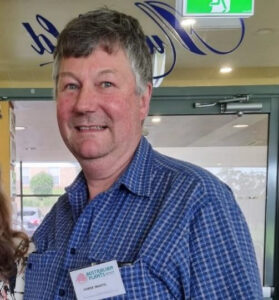
In 2012 he joined the Forensic and Analytical Science Service at Lidcombe which provided him with the opportunity to diversify into drug botany, in particular Cannabis casework. Simultaneously he developed the necessary photographic skills to help him with his diagnostic work.
James pointed out that Forensic Botany encompasses many areas such as soil sampling and analysis, palynology which involves the study of pollen and spores which can be used as botanical trace evidence together with fragments of leaves and wood in determining links with people places and objects. The use of microscopy techniques when undertaking soil and leaf analysis and the ability to record detailed photographic examinations helps to support and demonstrate crucial findings.
One case shared was the murder in 1961 of 8-year-old Graeme Thorne following a large sum of money won by his father in the Opera House Lottery. In those days prize-winners’ names and addresses were published in the newspapers. About five weeks later Graeme walked to an intersection not far from his home to wait for a lift from a family friend who used to collect him and take him to school along with two of her sons. When she got to the meeting point, Graeme was nowhere to be found. She returned to Graeme’s home and the alarm was raised with the Police about Graeme’s disappearance. His body was eventually found wrapped in a blanket at Seaforth. Forensic evidence included the presence of dog hair, some plant material from two species of pine tree and pink limestone mortar.
To help with identification of the tree species, Dr Joyce Vickery, a grass specialist, and botanist with the Royal Botanic Gardens at the time, was approached by the Police for assistance with analysing the plant material. Following widespread publicity, a postman came forward advising that he knew of a house on his daily route which had pink mortar and pine trees. Armed with the address, the Police arrested a person who was later charged with Graeme’s kidnapping and death. The use of botanical evidence and the overall strategy in investigating the crime was remarkable for its time, and highly successful. Dr Vickery was awarded an MBE for services in law enforcement.
When using microscopy, James explained the use of crossed polarised light techniques which allow for ‘birefringent’ substances to be detected which may not be visible in normal viewing. This is achieved by using two polarized filters, one on the light source and one in the binocular viewing head. Birefringent substances appear as coloured against a dark background. As well as being scientifically useful, these can be quite beautiful to look at.
Sometimes flexible nail varnish can be applied to a small fragment of a leaf, and when dried, the varnish film is gently peeled away, mounted onto a slide, and placed under the microscope. The cast of the leaf surface looks just like a piece of dead skin, yet under normal brightfield viewing it ‘comes alive’ to reveal intricate surface anatomy of the leaf. Features such as oil glands, stomata, and venation can be seen in astounding detail.
In another case which occurred approximately 10 years ago methamphetamine liquid was imported in bottles of Aloe Vera. Aloe Vera liquid is normally amber-coloured and so was the methamphetamine liquid. Cubes of Aloe Vera leaf settled to the bottom. These were filtered out by pouring through a sieve and remained there after the Aloe Vera juice was drained off. Methamphetamine drug was then crystallised out from the collected liquid. This large commercial case involved importation of 75kg of methamphetamine, a very serious crime. Police wished to know if dried flakes of plant material corresponded to cubes of Aloe Vera in the bottles, thereby establishing a ‘modus operandi’ of a clandestine laboratory operation. Under the microscope torn traces of veins showed the spilling of contents. Of particular interest was secondary thickening of xylem vessels which could be seen as spring-like spirals pouring out of veins in both evidence and reference material. This provided a strong correspondence between the two samples.
His extensive experience in microscopy and macrophotography provided an opportunity for James to become involved with the Cannabis Imaging Project which involves using specialised macrophotography techniques to reveal the microscopic features of leaves.
Photographers who make ‘macro’ photographs may take photos up to 1:1 magnification (where the image captured is the same size as the object photographed). Higher magnification beyond 1:1 is known as ‘photomacro’ imaging and is quite specialised. Surprisingly, it can produce higher resolution than a stereomicroscope commonly used in labs. The camera used is a Canon 600D DSLR with a wireless flash and various lens combinations covering a range up to 12.4X (a field of view just 1.8mm across). This method shows remarkable clarity of the different types of hairs and glands on the leaf’s surface. A study of patterns of distribution of hairs and their characteristic association with glands provided some very useful information which would be of benefit to drug botanists, who need to learn features of Cannabis and also to distinguish Cannabis from other similar plants.
James pointed out that DNA based techniques are potentially being used to identify botanical trace evidence gathered from the crime scene. Leaf detritus on the soles of shoes or from car boots and footwells may appear nondescript, but is amenable to analysis using simple techniques such as nail varnish peels.
The sad case of the 2018 murder of Brazilian national Cecilia Haddad was covered from the angle of botanical evidence. In this case botanical evidence was used to link the victim’s vehicle to the crime scene where her body was dumped. Probative value of this evidence was discussed. One might ask what some leaf matter might tell us. In this case the she-oak material from a street tree found in the footwell of a car was of great value. She-oaks are ‘unpopular’ as street trees, but useful for larger civic landscaping purposes. Evidence from the footwell of the vehicle likely came from the road under the she-oak street tree where the car was parked. It is rare to have such leaf litter on a road (a gutter maybe, but a road surface?). When these factors are considered, the evidence provides quite strong support for placing the vehicle at the crime scene.
Naturally James’ talk was enjoyed by all and generated many questions from the audience.
Following James’ talk, Phil Baird who owns a property near Karuah, where some members had the opportunity to visit last year, spoke about Grevillea guthrieana, an endangered species which grows in small pockets along the Northern Tablelands and on the Mid-north coast including near his property. The Grevillea takes the last part of its name “guthrieana”, after Christine Guthrie who is currently the Secretary, Treasurer, and the Editor of the Australian Native Plants Society of Australia Grevillea Study Group. Phil generously grew several from seed for attendees to on-grow, with the plea to nurture them and demonstrate in the years ahead that they have flourished. Thank you, Phil, and good luck, to all!
Our Secretary, Jennifer Farrer reminded Members that the January Meeting will be an informal get together, and following lunch there will be an opportunity for members to share some plant stories whether that be from walks, holidays, or our gardens.
Linda Pine, who along with Lynn Jones, enjoys cooking with indigenous edible plants (fruits, leaves etc.) showed us their latest and free publication titled “Using Native Edibles in Cooking”. Linda brought copies along for members. In future these booklets with all their delicious recipes and information about the plants will be found at the Community Environment Centre at the end of Currie Avenue Annangrove, or Linda will bring more copies along to our meetings. The Lemon Myrtle and Bush Lime Cheesecake looks particularly inviting!
Following the raffle, everyone enjoyed afternoon tea together, a chance to catch up and the opportunity to buy native plants from the great variety grown by our Propagation Group.
Cattai Hills Environment Network
Annual Report 2024

The Cattai Hills Environment Network (CHEN) has been at the forefront of educating, advocating, and celebrating the natural wonders in the Cattai and Little Cattai catchments. Since its inception in 2016, CHEN has worked tirelessly to build an informed and active community, advocating for the sustainable management of land and the preservation of our unique environment.
In 2024, CHEN continued to advance its mission to create a connected and coordinated community dedicated to conservation across both public and private lands in the Cattai and Little Cattai catchments. This annual report highlights our key achievements, projects, and the wonderful contributions of our dedicated volunteers and community partners throughout the year.
CHEN’s Mission and Objectives
Our mission: to build an aware community, encourage collaboration among stakeholders, and increase the effectiveness of independent conservation efforts across the Cattai and Little Cattai catchments.
Our five key objectives guide every aspect of our work:
- Community Outreach – To form a vibrant organization working actively in the
community, with key contacts in important CHEN projects. - Conservation – To acknowledge and preserve the biodiversity within the catchments,
ensuring appropriate land management practices, both on private and public lands. - Research – To engage in environmental research and monitoring, identifying key issues,
recording wildlife sightings, and bringing these findings to the attention of the broader community. - Advocacy – To build strength through fostering cooperation and advocating for more
sustainable land management practices across the catchments. - Education – To raise awareness and understanding within the local community about
natural resource degradation and the importance of adopting sustainable practices to protect our environment.
To read the rest of CHEN’s incredible 2024 Annual Report, click here.
Nature’s toothbrush
From the BBC
The toothbrush tree, Salvadora persica, has played a central role in dental hygiene for around 7,000 years. This small tree grows widely across much of Africa, the Middle East, India and Pakistan. In mature trees, the twisted trunk of pale bark leads up to a close-packed canopy of lush, small-leaved green foliage.
Since Babylonian times, the smaller twigs of the tree have been cut and stripped of leaves, and chopped into sections easily held in one hand. One end of the twig is loosened and frayed, creating a bushy fibrous tip that acts as an effective toothbrush, known as a miswak.
As well as helping dislodge the biofilm mechanically, the tree produces antimicrobial compounds that inhibit the growth of pathogens that cause periodontitis and cavities, and is naturally high in fluoride.

Planted forests – are they worth it?
Kevin Mills (from Budawangia newsletter)
I first knew Kiama Council’s Spring Creek Reserve several decades ago when I was involved with the local group planting it with native trees. At that time, the area was a Kikuyu paddock with one or two trees near the creek; these were an old Swamp Oak and a Cabbage Palm, both of which are still there.
Since then, extensive plantings of local natives, mainly trees, has taken place and now the area is a dense forest. Has this planted forest lived up to the expectations of those years ago?
The forest is well developed today, mainly as Rainforest and Swamp Oak Forest. Some of the natural values it now exhibits are quite evident and highlight the value in developing planted forest
•The rainforest is now self-regenerating, many native plants have found their way to the forest via bird and flying-fox dispersal, so that the plant diversity is much higher than was originally planted.
•Many plants, particularly the rainforest trees, are fruiting, providing a large seed source for the locality.
•The forest is a stepping stone for fauna and flora dispersal in the locality and the region.
•Bird life is prolific in the forest, most species being absent from the site before the forest was developed.
•The forest has long been a camp for a colony of the threatened Grey-headed Flying-fox.
The value for humans of being in nature has been mentioned within these pages several times. The Spring Creek Reserve is heavily used by local people, serving an important role in community health. Kiama Council, who are continuing to develop the forest with more plantings and ongoing maintenance, should be congratulated for their work in the reserve over the years, as should the original community group who started the whole thing off all those years ago.
So, take heart bush regenerators, your labours are most valuable in conserving our plants and animals, as well as looking after people’s health.
The Collectors’ Plant Fair
is on 12-13 April 2025 at a new venue, Penrith Showground.
For more information please click here.
Why do trees foam after rain?
Saponification
From Treecorp Solutions
Have you ever noticed white foam on trees after a downpour?
It’s a peculiar sight, often seen following severe rainfall and flooding, like we experienced on the Central Coast back in 2022.
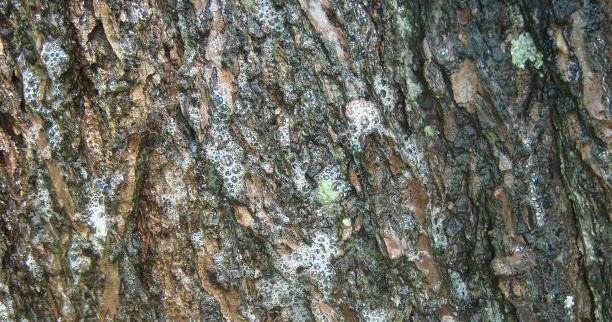
This phenomenon, known as tree foam, might have left you puzzled. But fear not, it’s a natural process called saponification.
Let’s dive into what it is, why it happens, and shed light on this curious occurrence.
What is saponification?
Saponification is when rainwater mixes with the sap inside a tree, producing a soapy foam. This foam is made from saponins, which are natural surfactants. They play a crucial role in helping the tree soak up water and nutrients from the soil.
What are saponins?
Saponins are fascinating compounds. Not only do they assist in nutrient absorption, but they also change how water behaves around the tree. When water, mixed with saponins, drips down a tree, it encounters air due to turbulence.
This interaction, along with the changed surface tension, leads to the formation of foam.
Tree Foam: Not Just for Trees
Interestingly, this foamy phenomenon isn’t exclusive to trees. It’s also observed in other natural environments:
•Rock Foam: Similar to tree foam, but occurs on rocks.
•Water Foam: Seen in rivers and oceans when phosphates mix with water and air.
Tree foam is a global occurrence, noted in every continent where trees flourish. It’s a testament to the adaptability and complexity of nature.
Why Do Trees Foam?
The reason behind tree foaming is quite straightforward. Trees, like any other natural surface, accumulate particulates, plant chemicals, and air pollutants on their bark.
These substances mix with rainwater, concentrating at the tree’s base, creating a crude soap. This soap, combined with the turbulence on the bark’s furrows, bubbles up into what we see as foam.
The Role of Soap in Nature
Soap, in this context, isn’t what we use daily but a natural mixture of alkali materials (like sodium or potassium) with carboxylic acids. It’s a natural cleaning process, in a way, for the tree.
In Conclusion…
Next time you spot a tree foaming after the rain, remember it’s a natural and fascinating process. Nature has its ways of cleaning and nourishing itself, and saponification is a perfect example of this.
Sorghum leiocladum
Steve Douglas
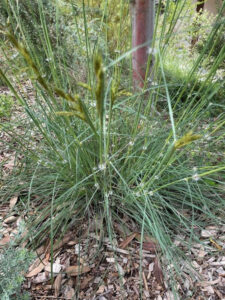
Sorghum leiocladum is doing well in basalt soils in my front yard – flowering for the first time. About a week ago I found a huge wild population on a regen ag farm in Werai in the NSW Southern Highlands. This species was likely a significant grain resource for Gundungurra and many other people, but European pastoralists wiped out much of it and left invasive exotics like Phalaris, Cocksfoot, Yorkshire Fog and Kikuyu instead. I’m pleased to see it in the wild in the Highlands where there are very few records of it, and in a paddock that will be fenced to exclude stock, then replanted for wildlife.
The species likely used to occur on clay soils in Parramatta/Hills areas. I’m pretty sure I learnt of it when I worked in Western Sydney – it was probably a Regionally Significant species in the Biodiversity of Western Sydney reports. I don’t think I saw it until I lived in Canberra, where it could be found on some of the urban hills in Canberra Nature Park.
The one in my front garden (on heavy basaltic soils) was a tubestock planting from Cool Climate Natives in Pialligo ACT. It didn’t do much for a couple of years, which I thought might have been because it is under a fast-growing Angophora costata x hispida, but it is now very happy and flowering well.
I love those fluffy ligules!


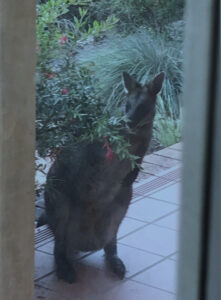
One of my garden friends having a feast on Grevillea ‘Lady O’ near the front door.
Yum!
The people growing their own toilet paper
From The BBC

One million trees worldwide are cut down each year to make toilet paper. Is it more sustainable to grow your own?
In Meru, a town in eastern Kenya, a lush, leafy plant sways over the landscape. Benjamin Mutembei, a Meru resident, is growing the Plectranthus barbatus plant – not for food, but to use as toilet paper. He started growing the plant in 1985. “I learned about it from my grandfather and have been using it ever since. It’s soft and has a nice smell,” he says.
Plectranthus barbatus is a leafy plant that can grow up to 2m (6.6ft) tall. Its leaves are roughly the size of an industrial toilet paper square and emit a minty, lemony fragrance. Covered in tiny hairs, the leaves have a soft texture. This plant thrives in warm tropical temperatures and is widely grown across Africa.
To read the rest of this article, click here.
Interesting links . . .
Although bees get all the glory, beetles are the unsung pollinators of many native plants – from The Conversation.
Restoring mistletoe in the Hunter Valley – from Ecological Management and Restoration
As Australia’s giant trees succumb to fire or drought, we’re racing to preserve their vital genetic data – from The Conversation.
The best Australian plants for your garden – from The ABC.
Mangrove Boardwalk and the ‘Dreaming Track’ – from Sydney Olympic Park Authority.
Here are seven ways to attract birds to your garden – from The Conversation.
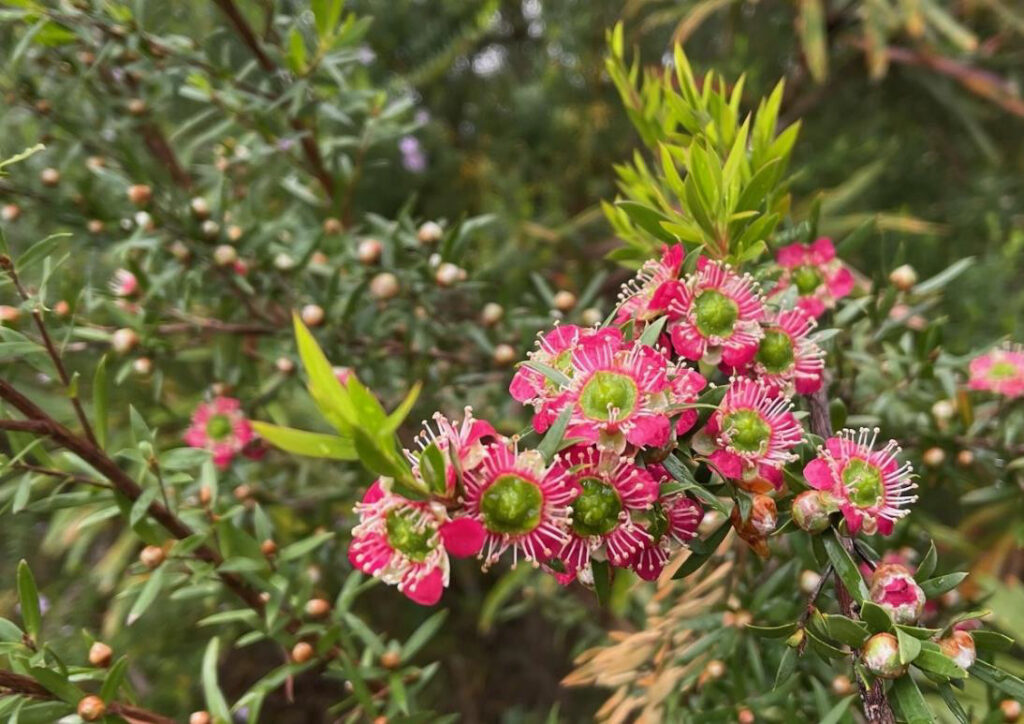
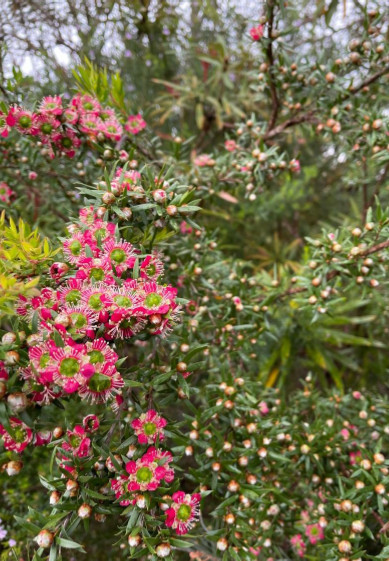
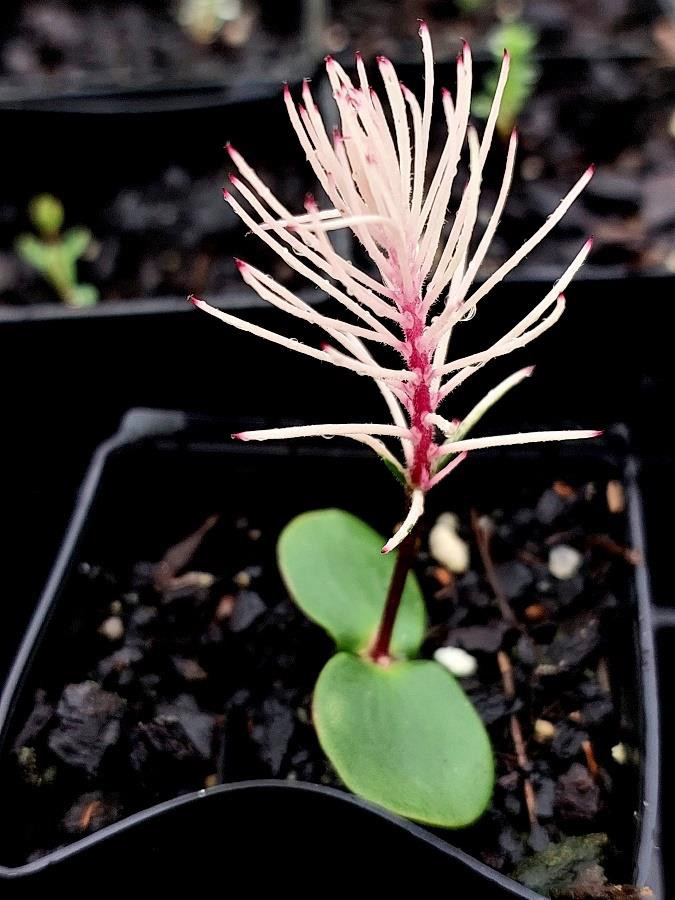
Leptospermum spectabile is one of the plants our Group propagates at the nursery.
It grows naturally in a small area near the Colo River, and makes a wonderful garden plant.
For more information from the APS NSW website click here.
Photos Lesley Waite.
Variegation
Emma Brame – Nursery Horticulturist, Sutherland Shire Council
From The Bushcare Bulletin January 2025
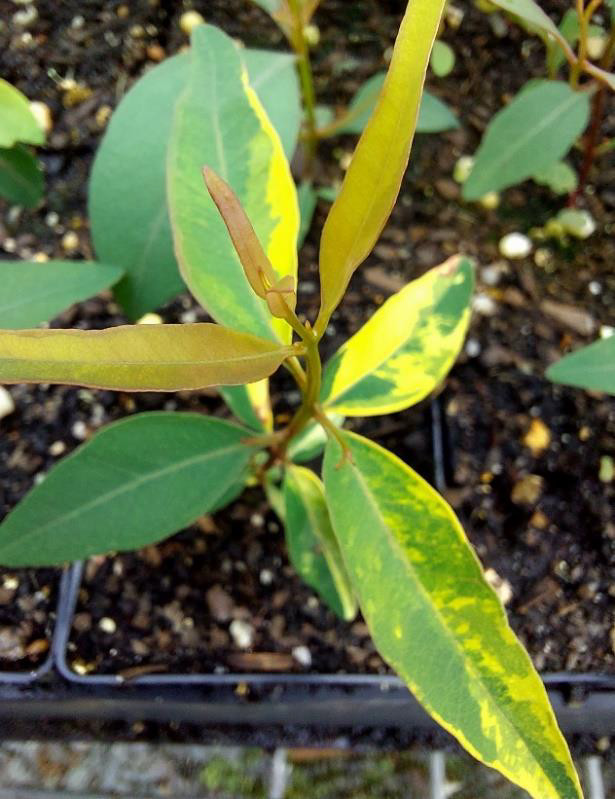
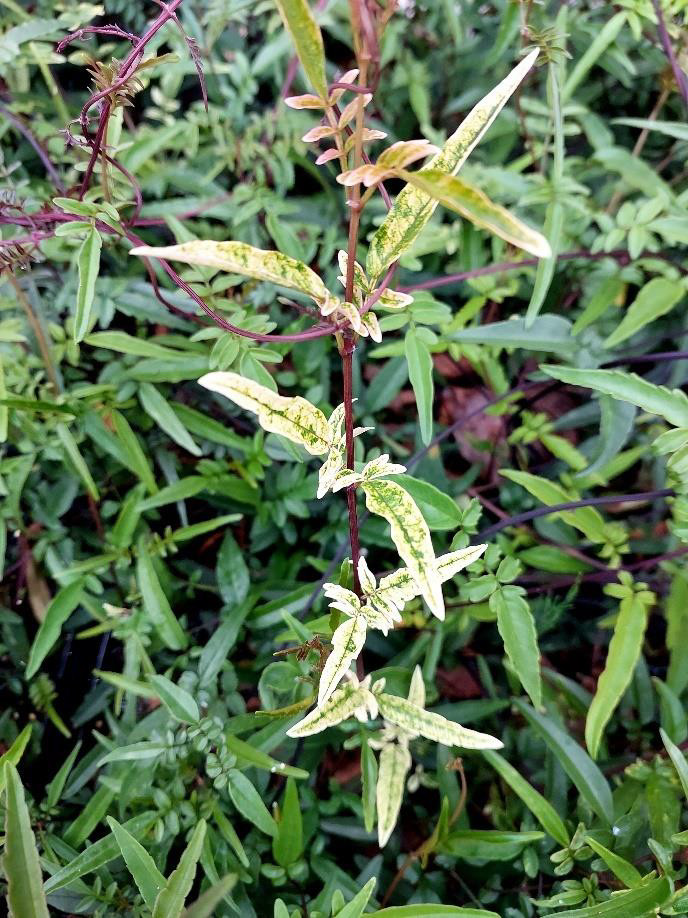
Variegation in plants is when the leaves have more than one colour on them. Most commonly this can be tones of light green, white, yellow, pink and red. The differing colouration can be in the form of dots, blotches, stripes, speckles or along the edges.
Variegated plants can be very appealing and are more commonly known in the indoor plant world. They can be very rare and collectable, not to mention expensive! When it comes to natives, variegation is usually seen more in cultivated plants.
There are three main types/causes of variegation:
- Genetic or Pattern Gene Variegation
This is a natural form of variegation of markings making almost defined patterns along the leaves that almost look like they have perfect symmetry on either side of the leaf margin.
2. Viral variegation
As the name suggests this type of variegation is caused from a virus. As long as the virus is active in the plant, variegation will occur. Mosaic Virus is a commonly known type of this and usually affects mainly vegetable and fruit crops.
3. Mutation, also known as Chimeral Variegation
This is the most common type of variegation and is caused by lack of chlorophyll (green pigment) and a mutant cell. In the nursery we see this on the odd occasion in seedlings. However, it will either revert to its natural form if healthy enough or it will struggle to survive. The leaves turn brown and eventually drop off due to several reasons, the main one being too much water as variegated plants require less water. They also require less fertiliser as they are sensitive to a number of elements in fertilisers, even the low phosphorus native fertiliser used in the nursery.

New ANPSA study group announced
Australian Native Plants Grafting Study Group
From the Harbour George River Group’s Newsletter November 2024
ANPSA – the Australian Native Plants Society (Australia), is an association of state- and
territory-based native plant societies. As a national body, one of its roles is to support specialist Study Groups whose aim is to record the successes (and failures) of growing Australian species in various localities. Currently there are 18 such groups and the latest has just been endorsed and will be publicised nationally by the State branches and SG Co-ordinators.
The Leader of the new Australian Native Plants Grafting Group is Maria Hitchcock OAM.
Maria is former leader of the ANPSA Correa SG, the ANPSA Waratah & Flannel Flower SG and Save our Flora, an online national project dedicated to advocating for the cultivation and preservation of our endangered flora. She is a Life Member of APS and author of several publications.
Membership of this Study Group is free. To join send an email to: graftingstudygroup@gmail.com
Please include your name, address, mobile phone no. and APS group to which you belong.
Additional information provided by Maria:
Many of us have been propagating Australian native plants for some time, learning about the complexities of seed dormancy, the use of smoke in germination and the intricacies of cuttings propagation. Some of us have progressed to the next frontier which is grafting.
We know that some of our more desirable plants struggle in gardens when grown on their own roots and there has been much work done on plant compatibility, matching stock and scion with mixed results. One person’s success might be another’s failure. This SG hopes to attract both professional and amateur grafters to share information and help beginners to develop techniques which work. We will share information on the best equipment to buy and how to set up a working space for our propagation efforts.
Some time ago the Armidale Branch of APS started a small grafting group. We meet once a month in rotation on a Sunday morning, prepare a number of grafted plants and enjoy a cuppa together. We have now expanded this group into a formal Study Group to give other ANPSA members the opportunity to learn about the exciting techniques of grafting.
Living on the Ledge: Saving the Dwarf Mountain Pine (Pherosphaera fitzgeraldii)
Renewed efforts to save the Dwarf Mountain Pine – in light of its potential upgrade to ‘Critically Endangered’ status – are giving greater recognition to a rare and unusual prehistoric native in our midst.
The Dwarf Mountain Pine is endangered with only about 750 plants left in the wild, according to the latest survey.
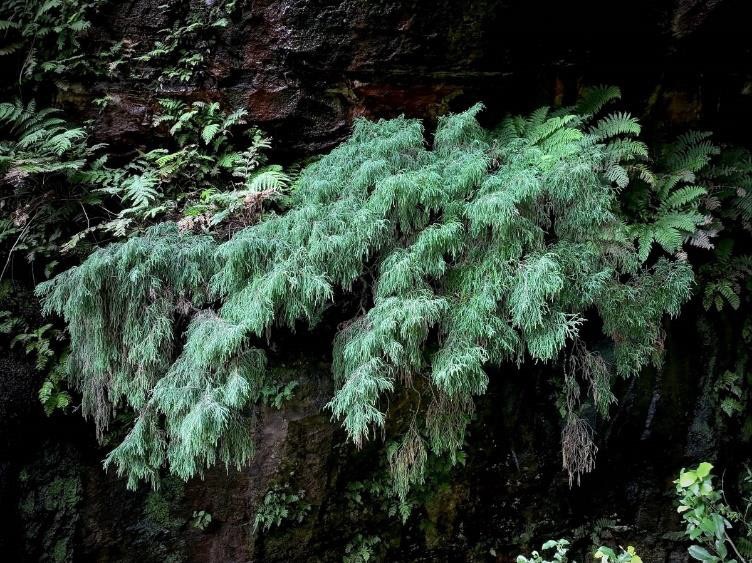
Photo: Sarah Delaney
The survivors are limited to waterfall spray and seepage zones in the southern escarpment between Katoomba and Wentworth Falls.
A collaboration of local community, native plant nurseries, Blue Mountains City Council, the NSW National Parks and Wildlife Service and the Saving Our Species program is working to save the pine from extinction.
To read the rest of this story from Katoomba Area Local News please click here.
Eloquent Eucalypts
From Wild Blue Mountains Facebook
Pictured are some of the eucalypts seen in Blue Mountains bushland that never cease to amaze with their endless variety, character, and colour.

Whether flaky, satiny, flushed with colour or burnt to charcoal, the bark of eucalypts is as individual as our own skin, each telling an expressive story of the trees quest for survival, and its role in the ecosystem.
As skin is essential for our survival, bark is the outer skin of every living tree, providing an essential outer protective layer. The thin layer that is just underneath the bark, the cambium, is the only part of the tree trunk that has living, growing cells. The cambium overlays the central core of wood and it’s what makes the trunk, branches, and roots grow thicker over time.
The bark helps to guard the cambium layer against damage by weather, insects, animals, and organisms that can cause disease. While bark is essential for the survival of a tree, many other organisms including insects, mammals, and birds also make use of bark for food and shelter, sometimes damaging the bark in the process. A tree will cope with the loss of some bark but if the damage is extensive the tree can’t survive.
The red flowering gum: a perennial favourite and a summer stunner
Gregory Moore, Senior Research Associate, School of Agriculture, Food and Ecosystem Sciences, The University of Melbourne – from The Conversation.
If you’ve been on a summertime stroll in recent weeks, chances are you’ve seen a red flowering gum, Corymbia ficifolia.
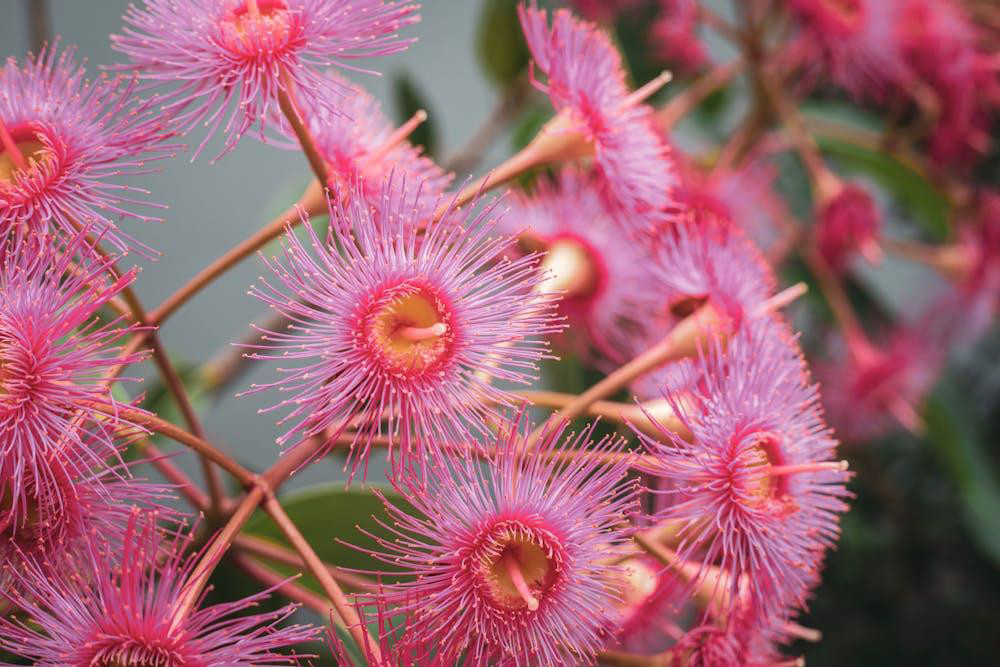
This species comes from a small area of south west Western Australia but has been a perennial favourite with Australian gardeners for well over a century. It’s often planted in domestic gardens, streets and parks, demonstrating its versatility and appeal.
But while its large brilliant flowers attracted early horticultural attention, this summertime stunner’s path to being a successful urban tree has not always been easy.
Difficult to grow from cuttings
Red flowering gum is a small-to-medium-sized tree that can reach a height of about 15 metres, but most trees are ten metres or less. Its leaves are somewhat fig-like, as the name, ficifolia, suggests. They are shorter, wider and a deeper green than many eucalypt leaves. While it can be frost sensitive when young, it usually copes well once it reaches a height of two or three metres.
Red flowering gum can tolerate a wide range of different soil types and its often massive lignotuber means it can cope well with the occasional fire. (A lignotuber is a swelling at the base of the trunk containing dormant buds and carbohydrate).
Corymbia ficifolia can produce flowers that are white, pink, orange or red, but red is the favourite. In fact, a great deal of effort over many decades has gone into getting commercial specimens that reliably produce the expected colour. This might be easily achieved in other plant species. Eucalypts, however, are notoriously difficult (but not impossible) to grow from cuttings and to graft.
Most red flowering gums have been grown from seedlings, where there is always the risk of variability in characteristics, including colour. Cuttings are clones and so are the same colour as the single parent tree. Seedlings, on the other hand, share genetic material from two parents, which leads to variability in colour.
Much of what we know about eucalypts has comes from forestry, where there has been huge commercial interest and funding for research. However, the great potential of Corymbia ficifolia as a popular nursery product has ensured continuing horticultural interest, effort and expenditure for decades.
Horticultural history
All sorts of experiments have been done in an attempt to propagate cuttings of red flowering gum, and they represent milestones in our knowledge and research about eucalypts. In the very early days, back in the late 1800s, classic selection techniques were used to source seed from the best of the red flowering gums. The idea was that while not all would produce progeny with great colour, many would have good colour because of their excellent parentage.

Red flowering gums aren’t just popular with humans. Neil Cox/Shutterstock
Nursery production in the late 1800s was in full swing, so attempts to grow Corymbia ficifolia from cuttings were inevitable, but there was little if any success. However, by the 1950s it was known to foresters that eucalypt juvenile material was more likely to prove successful. Some tried to grow cuttings using juvenile material from seedlings or using shoot tips from trees known to be bright red. Others tried propagating from epicormic shoots (which spring from just under the bark) and lignotuberous shoots, which possess many juvenile characteristics.
But while there were a few successes, the rate was far too low to be commercially viable. Growing red flowering gums from seedlings continued to be the way. By the 1970s, the using of rooting hormones was allowing greater success. But soon tissue culture, which involved the use of complex mixtures of hormones in sophisticated growing media, emerged as a successful propagation technique. It worked, but tissue culture of eucalypts was not easy; there was lots of expensive trial and error before success. A lack of consistent success means this form of propagation has yet to be taken up by industry.
While all this was happening, others in research laboratories and nurseries were also trying to graft selected red flowering gum shoots onto established seedling root stocks.
The previous work on cuttings and contemporary work on tissue culture provided some insight into what might be required to successfully graft red flowering gum onto other eucalypt, or even its own species’ root stock. But it still took time and effort before real success was achieved around the turn of this century.
Grafting often results in smaller trees that flower precociously and abundantly, which is probably why they are of smaller stature. Flowering early and so abundantly takes a lot of a tree’s resources and so they often grow smaller in stature.
Hard work and good science
These days we can take the varieties of Corymbia ficifolia for granted. We might see a mini red or baby orange or a tall pale pink fairy floss, summer red, apricot dawn or the white snowflake in spectacular garden or streetscape plantings. If you see a very small or very large brilliantly coloured flowering gum, odds are that it is one of the newer grafted varieties of Corymbia ficifolia.
If you have a grafted variety in your garden, make sure you remove shoots that might grow from below the graft. They can grow very fast and revert to the original red flowering gum form and colour.
I still have a real soft spot for the spectacular larger red flowering gums. Perhaps it is due to childhood memories, or a reminder of when students and I were attempting (with mixed success) to grow red flowering gum cuttings using various plant hormone combinations in the mid-1980s. Or perhaps it’s because we are still yet to crack all the secrets involved in producing great specimens every time.
But most likely it is because I know how much hard work and good science has gone into giving us the splendid Corymbia ficifolia specimens we see today.
Our first meeting for 2025
Jennifer Farrer
We met at Gumnut Hall in Cherrybrook for our first members’ meeting on Saturday 25 January. Some members met for lunch beforehand in the very pleasant outdoor area. Others came for the meeting in the afternoon.
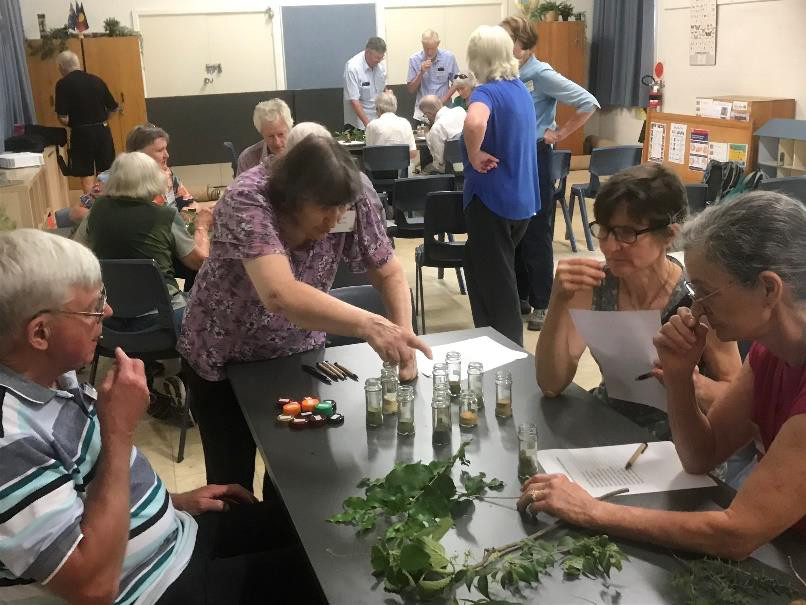
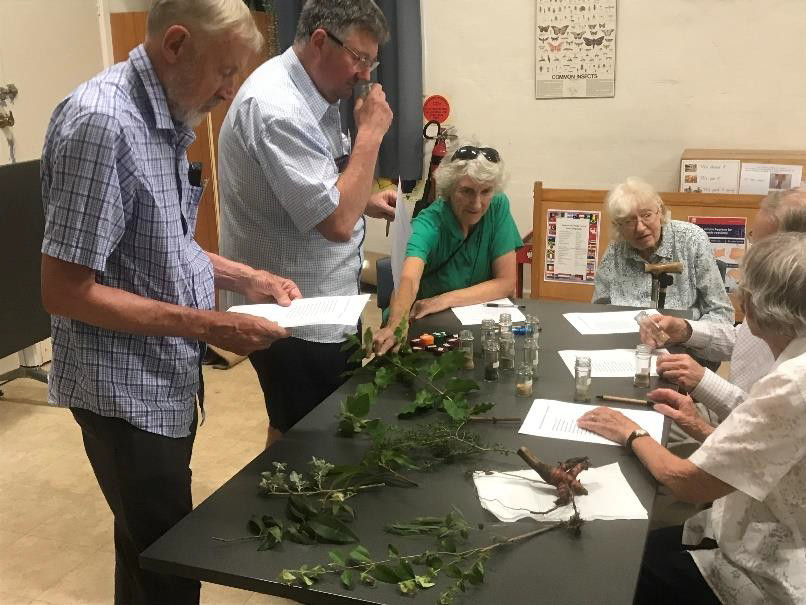
Our first activity was organised by Linda Pine who, as many of you know, is our native food expert. She had laid out eight samples of vegetation to be matched with the dried powders which she creates to use as flavours in her recipes. There were also three more samples of native ingredients to also be matched with the lists she provided each group. This proved much more difficult than everyone expected as you can see from the puzzled expressions in the photos:
Our next activity was also a brain teaser. Alan Wright asked us to guess the NSW place names from some very perplexing clues. My ‘favourite’ was this: E+E+E+E+E . . . the answer is Moree. We had a lot of laughs from this one.
I then showed some photos for the two excursions which I undertook as part of the ANPSA Conference program last October.
Dandenong Ranges. While these hills East of Melbourne are not particularly high even by Australian standards, (Mt Dandenong is 633m) they do provide a completely different climate from the plains of Melbourne. We walked the Hardy Gully Trail in Sherbrooke Forest at Kallista to see Mountain Ash (Eucalyptus regnans), the highest flowering plant in the world and Sassafras (Atherospermum moschatum), Bedfordia arborescens and Olearia argophylla, possibly the world’s tallest daisies, and many varieties of ferns. The walk was led by Rodger Elliott. I had been to Sherbrooke Forest many times before but this was the first time I had visited with an expert who knew the names of every plant.


After that it was on to Karwarra Native Garden at Kalorama near the summit of Mt Dandenong. This native garden has been established for over 50 years and flows seamlessly into the surrounding bush. The plants growing in the rich volcanic soil seemed to be growing on steroids.
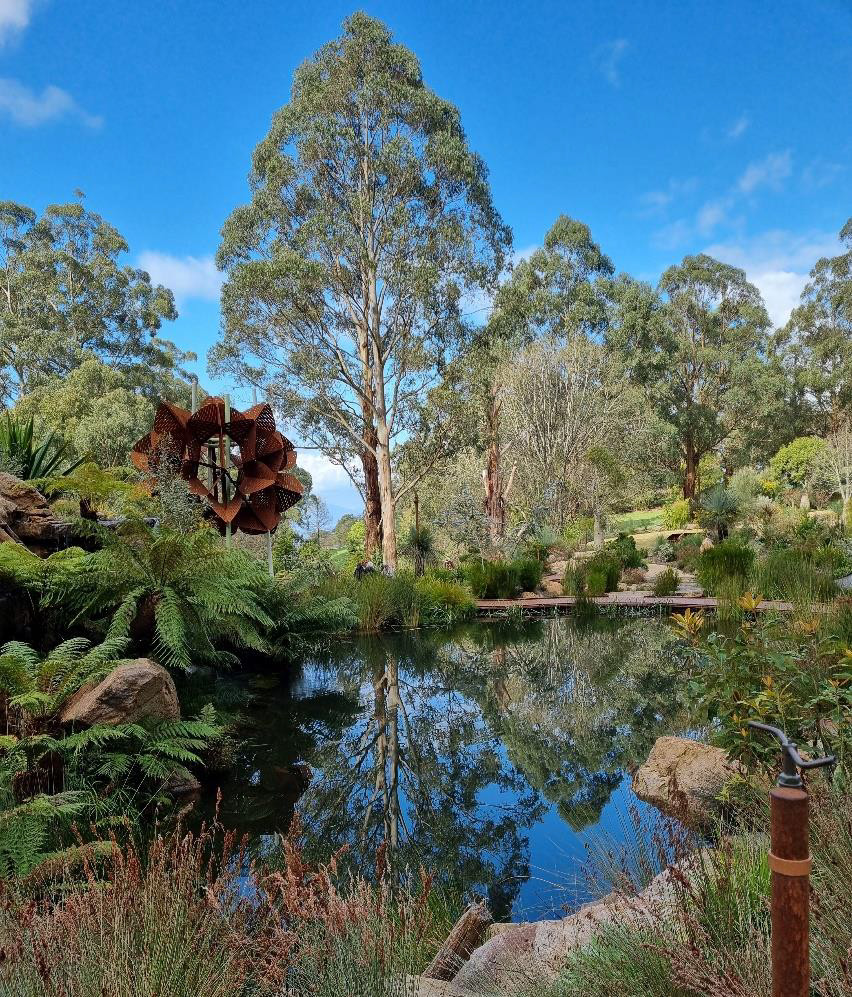
Our last visit was to the recreated Chelsea Garden at Olinda which won the best in show award at the Chelsea Garden Show in London in 2013. There is a very good description of this by Heather Miles on the APS NSW website here.
Chelsea Garden, Olinda
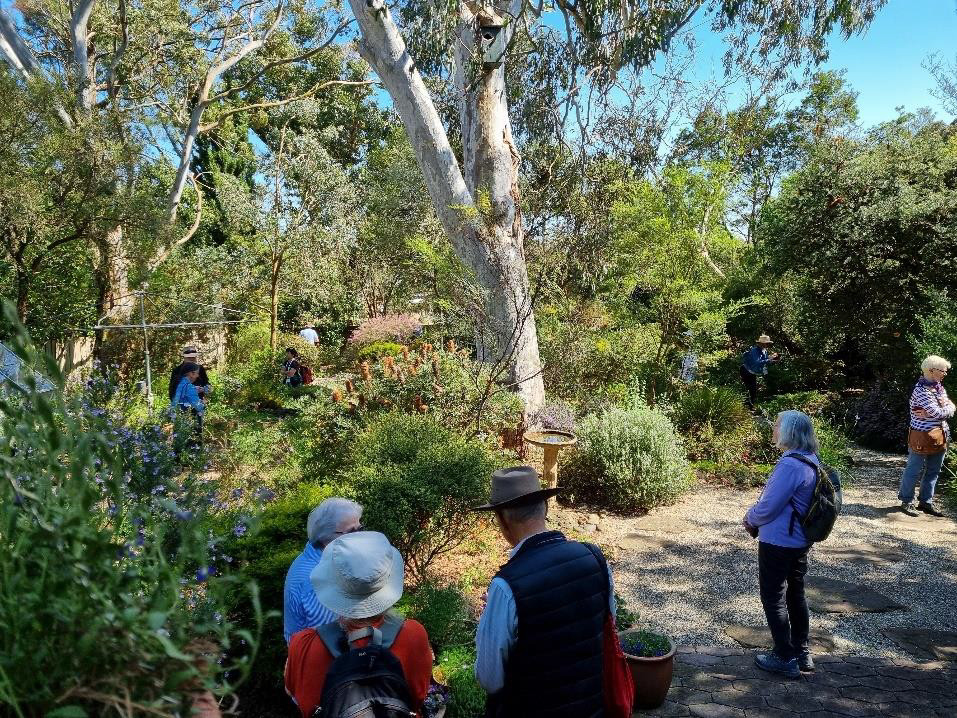
City of Knox Gardens for Wildlife This program started as a citizen-led initiative in 2006. We visited three gardens, one on a standard 1000 sq metre suburban block, a school garden and a larger garden on one hectare. The suburban garden belonged to Bev Fox and was redesigned in 2003. It was hard to believe you were in the suburbs standing in her backyard. The school garden was Knox Park Primary School where Fred Rogers was Principal in the early 1970’s. It hosts a stand of endangered trees, Eucalyptus cephalocarpa and as it adjoins a lakeside reserve is part of a significant wildlife corridor. It also has a specially planted butterfly garden. The large garden belongs to Chris Larkin who has been developing it since Members of the Garden Design Study Group will be familiar with her philosophy of creating a garden which is beneficial to humans and wildlife.
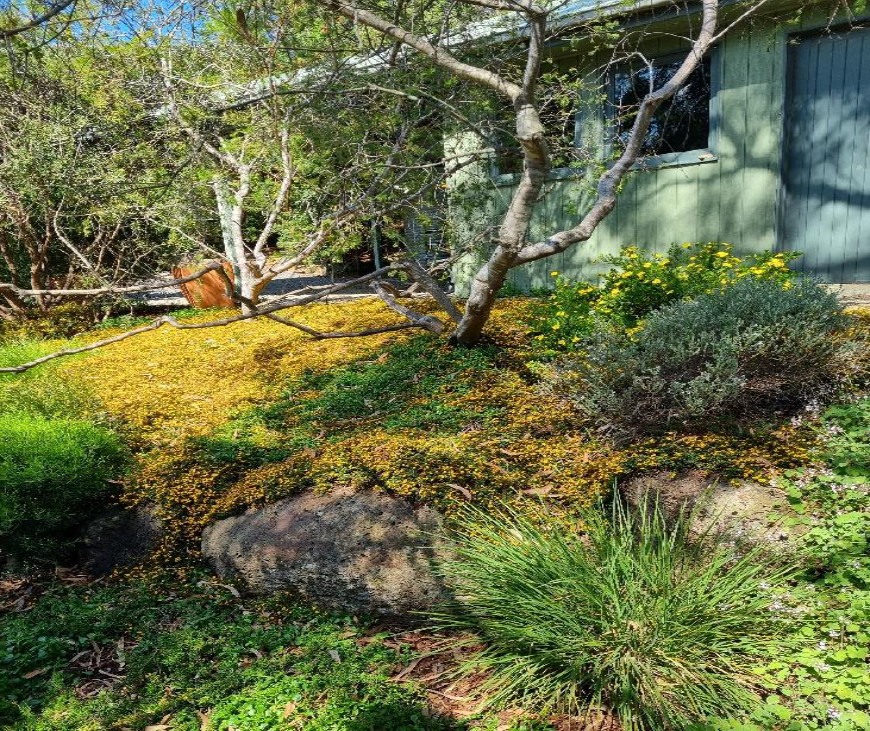
Finally, Jim Nash gave us an account of progress in regenerating the bush and creating a bush garden on his and Ricki’s property at Kenthurst. Jim spoke about each of the eight terraces leading down to the creek and up again, each of which has differing soil depth, soil type, sun exposure and micro-climate. It was an extremely interesting presentation.
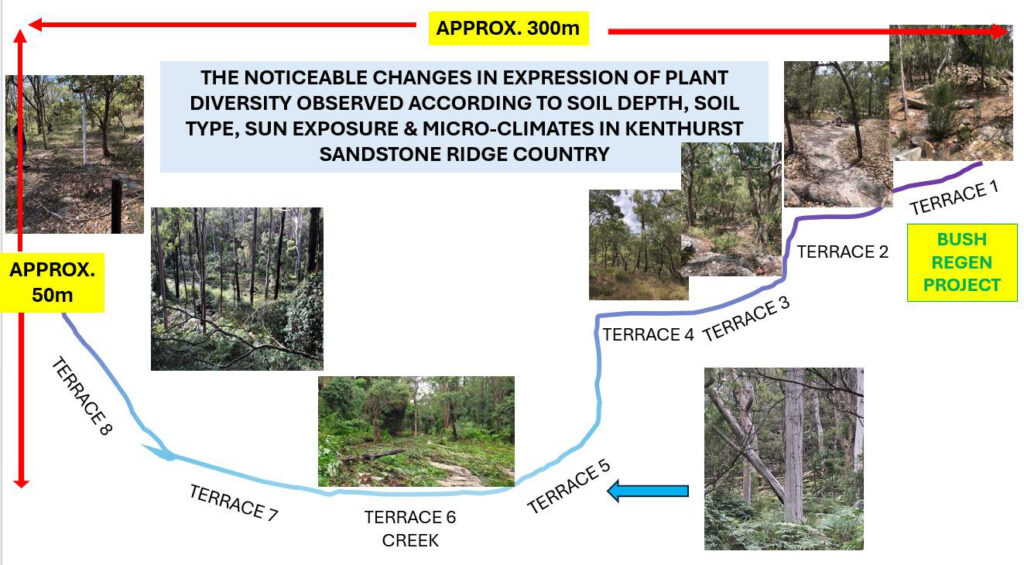
The diversity to be found in Kenthurst on a smallish block was of some surprise to many, but judging by the questions during and afterwards his talk was very well received.
Jim also showed us photos from cameras he has set up to record wildlife, especially at night. These included swamp wallabies, goannas (Lace Monitors), a wombat, and (unfortunately) foxes and deer. The deer are an increasing problem. New plantings need to have mesh guards erected until fully established. Even some of the native bushes such as Persoonias get damaged with whole branches being broken or torn off.
Share your stories . . .
Your contributions to Calgaroo are always welcome.
If you have interesting observations of plants in the garden or the bush, photos, or any other news, please send them to me at itcox@bigpond.com for the next edition.
* * * * * *
In the spirit of reconciliation, we acknowledge the Traditional Custodians of our Country, the people of the Dharug Nation, whose cultures and customs have nurtured, and continue to nurture, this land since time immemorial. We honour and celebrate the spiritual, cultural and customary connections of Traditional Owners to Country and the biodiversity that forms part of that Country.
* * * * * *
Page 19

Parramatta and Hills District Group
SECRETARY: Jennifer Farrer apsparrahills@gmail.com 0407 456 577
EDITOR: Ian Cox itcox@bigpond.com
Join us on Facebook here
Join us on our websibsite here