Download Apr 2025 PDF file
CALGAROO

A journey into nature

Newsletter of the Parramatta and Hills District Group

Australian Plants Society NSW Ltd

Our vision: inspiring people to admire, grow and conserve native plants
WHAT’S ON IN 2025
| 23 April Wednesday 10am: | Propagation |
| 26 April Saturday 2pm: | Bushwalk Brush Farm Eastwood. Leader Jennifer Farrer |
| 21 May Wednesday 10am: | Propagation |
| 24 May Saturday: | Bushwalk Waterfall Walk West Pennant Hills. Leader Jennifer Farrer |
| 18 June Wednesday 10am | Propagation |
| 28 June Saturday 2pm: | Members’ meeting Gumnut Hall Speaker Brian Roach “Amazing Greys” |
| 16 July Wednesday 10am: | Propagation |
| 26 July Saturday: | Bushwalk Jones Road Fire Trail Kenthurst |
| 23 August Saturday: | Visit to Muogamarra NP – details TBA |
| 27 August Wednesday 10am: | Propagation |
| 24 September Wednesday 10am | Propagation |
| 27 September Saturday: | Visit to Boongala Gardens Kenthurst |
| 22 October Wednesday 10am | Propagation |
| 25 October Saturday: | Bushwalk Agnes Banks/ Castlereagh Nature Reserve. Leader Daniel McDonald |
| 19 November Wednesday 10am | Propagation |
| 22 November Saturday | Members’ meeting and end-of-year celebration, Gumnut Hall. Speaker Linda Pine “Using Native Edibles in Cooking” |
| 17 December Wednesday 10am | Propagation |
If you’d like to come to our propagation days at Bidjiwong Community Nursery and haven’t been before, you can get details from Lesley Waite – phone 0438 628 483
* * * * * *
Bushwalk Brush Farm Park Eastwood
26 April 2025
Meeting Place: Brush Farm Park car park Lawson Street Eastwood.
Time: 1.45 pm for 2 pm start.
Distance: 2km. Grade: Medium.
The walk is on bush tracks with a descent into one side of the valley and ascent on the other side. There are steps in the steeper sections.
Our first bushwalk for this year will be at Brush Farm Park Eastwood. The park is a remnant of Gregory Blaxland’s property which extended from this location to the Parramatta River. The house which he built in 1820 is located on the other side of Lawson St from the park.
The walk descends quite steeply into the valley below through remnant Sydney Turpentine Ironbark Forest. There are two trees near the start of the walk which are estimated to be more than 200 years old. As we descend into the rainforest gully, the dominant trees become Sandpaper Figs and Lilly Pillies with an understory of ferns. On the return walk we can see Coachwoods and Sydney Blue Gums.
If anyone is interested in looking at the house before the walk, it is possible to park behind the house. It’s usually open at 1.30pm on Saturdays.
Please register your interest in coming on the walk at apsparrahills@gmail.com
Jennifer Farrer
“It’s surely our responsibility to do everything within our power to create a planet that provides a home not just for us, but for all life on Earth.”
— Sir David Attenborough.
Bountiful Botanicals: A Botanical Art Worldwide Exhibition
28 March – 18 May 2025
Belconnen Arts Centre
118 Emu Bank, Belconnen ACT
The exhibition features plant species that are bush foods, medicinal and utilitarian indigenous to Australia. This may include natural hybrids and cultivars.
Entries from botanical artists across Australia were solicited and selected by an experienced jury. From these selected works, 40 were chosen to be sent digitally around the world for viewing
in the other participating countries. Those chosen showcase both the talent of our botanical artists and the diversity of our native flora, as well as First Nations’ knowledge and care of our amazing indigenous plants.
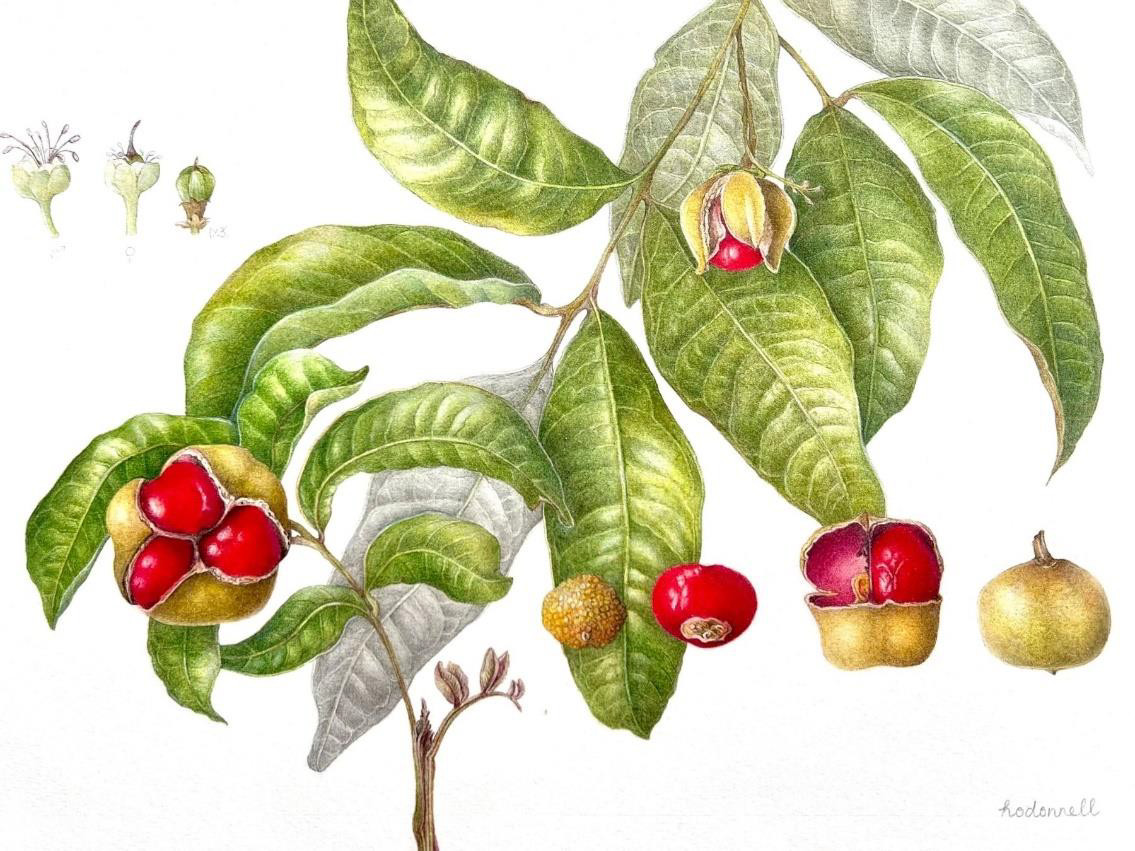
Artwork: Diploglottis campbellii – small leaved tamarind by Harriet O’Donnell
For more details, click here.
Habitat Gardening for Birds – a free online course from Birdlife Australia
Learn how to support native Aussie birds by creating a habitat garden at home.
What’s the course about:
You’ll learn from bird experts and garden design gurus while exploring the essential features of a habitat garden and discovering what birds need to thrive.
Whether you’re a seasoned gardener or just starting out, by the end of the course you’ll be equipped to design, establish and maintain a habitat garden to attract and support a diverse array of local birds, as we guide you through each step of the way.
So, prepare to spread your wings – your neighbourhood birds will thank you! And we can’t wait to see the wonderful habitats you create.
For more details, click here.
From Melbourne Pollinator Corridor:
Melbourne Pollinator Corridor (MPC) – Update
This summer saw us take a huge step forward with managing the sites. With more depth of experience in our volunteers, we have been able to fine-tune our summer regen rhythm further and trial different ways of working together. We are more on top of the gardens than ever before, and the sites are not only looking great but also pumping full of critters…exactly how we love it!

Above: It has taken four years to regenerate this 100m2 nature strip on Bank Street, South Melbourne, to the point where the plants are quite established. Challenges have been the incredibly compacted and poor-quality soil and nose-in public parking. BUT we have kept at it and it has come through this summer really well. Also, when you consider the site has probably been ignored and treated poorly for almost 200 years, creating this in four years is actually really incredible.
Interesting links . . .
Three unusual plant ecosystems to spot on your next road trip – from The Conversation.
Restoring habitat for the Regent Honeyeater in the Capertee Valley – from NSW Local Land Services. A video featuring Dick Turner, iconic APS member and forest expert.
Finding hope on Faulconbridge Ridge: Rare native bee rediscovered – from Springwood Local News.
Mistletoe blossoms as a positive parasite across Australia – from The ABC.
“Bindera”
Pip Gibian
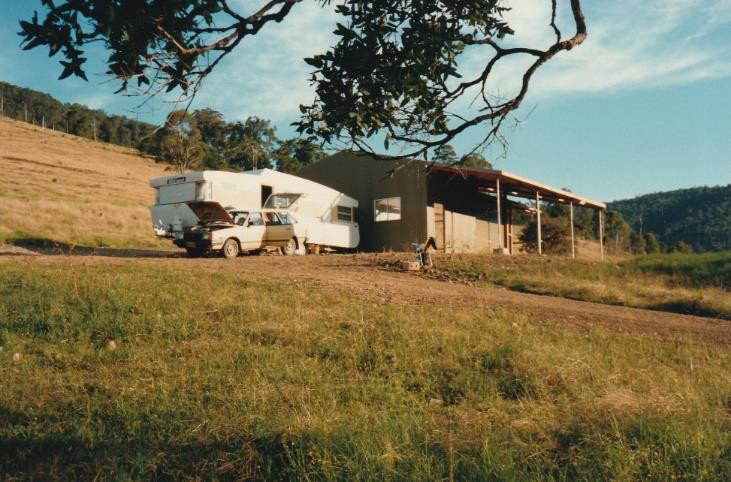
In 1989 Tom and I bought a small cattle property of 150 acres/60 hectares freehold land in the Gloucester district with an accompanying lease of 450 acres of the adjacent Copelend State Forest. On asking Forests NSW what we could do with this large lease, it seemed that we could remove the tree orchids and birds nest ferns and sell them! Our aim was to establish a timber plantation, or re-forest some clapped-out cow country. It certainly was not good grazing land, steep-sided, north-facing land adjacent to the Bowman River. We had a large shed erected, with adjacent water tank, fed from the roof and a toilet put in the shed with a septic tank. We bought a reconditioned caravan to stay in.
When they flattened the shed site, I was asked where they should put the fill. Despite their doubts this was made into a long mound a bit below the shed. This was our first garden.
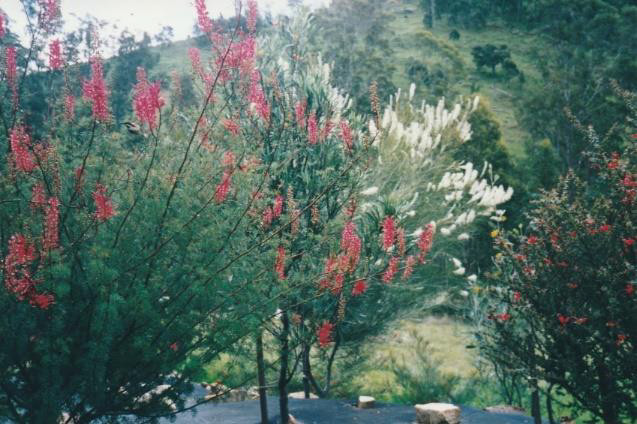
Here is Sydney we originally bought an un-cleared bush block, and cleared barely more than needed for the house. We are surrounded by huge Eucalyptus pilularis and Angophera costata, and the garden has no full sun areas at all. In the Bowman we had sun morning till night, so we planted the garden mostly with grevilleas, some of which were grafts. There were other species including a Buckinghamia celsessima, one of Audrey Taggart’s pink callistemons and a small row of Melaleuca thymifolia.
Some years later we instructed a bulldozer driver to make a second mound in the wide area of open land we had left around the shed – I suspect he thought we were mad. Lots more plants, mainly grafted grevilleas, went in there.
Still more years later, a council worker came in to explain they were widening the road nearby, because the school bus had nearly been involved in a head-on collision. They had some “fill” and did I want the nearest gully filled in (this is what you do with “fill” in the country). “Well no, but put it here”, and I proceeded to mark out with stakes another large oval. They backed the trucks in around my markers and tipped. This is the “rock mound” complete with a great gully in the middle for good drainage. What they tipped was sandy clay with lots of sandstone chunks.
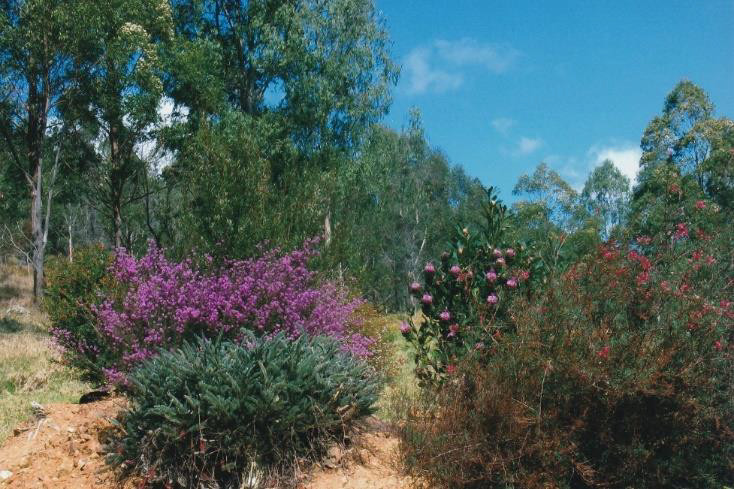
Now we have three mound gardens, all with full sun. Over the years some plants have done well, some not, some have deteriorated in old age, some have grown too large and needed to be removed, but we have been able to grow the grevilleas and many other native plants in the full sun we could never provide in Sydney.
What we started with in 1990
The Rock Mound
Kunzea ambigua pink, Telopea ‘Corroboree’.
Grevillea dielsiana red with young timber trees in background


From HEN email 11 March 2025:
HEN has a weekly radio program ‘Hawkesbury Eco Hour’
HEN has a regular radio program every Saturday morning ‘Hawkesbury Eco Hour’ 9am – 10am on Pulse FM 89.9FM. Our first ‘on air’ program was last week!!!
Your regular hosts will be Eric Finley, Nick Soudakoff, and Lyn Ward plus special guests. Please tell your friends, and tune in!
In other positive news, at tonight’s Hawkesbury Council meeting the first stage of the Koala Plan of Management, the fine scale vegetation mapping will be ready to be received by Council. This important part of the project will also inform Council on land use planning, and development assessments. It is recommended that Council confirm the next stage of the KPOM, which will be preparation of:
- Koala Food Tree List, and
- Highly suitable Koala habitat map.
We want to again thank the community for their support and advocacy on this issue, and Council staff for ensuring the Council decisions are implemented.
Looking forward to talking about environmental issues across the Hawkesbury and catchment each Saturday morning!
Growing food for wildlife
at the Community Environment Centre Annangrove
From the Growing Food for Wildlife website.
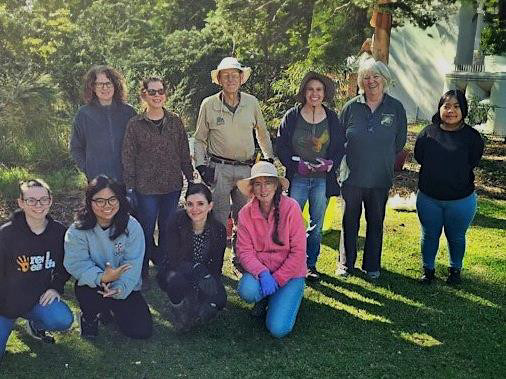
Growing Food for Wildlife is an extremely rewarding process. Imagine learning how to grow edible plants for the birds and animals who need them while knowing you are also making a positive difference to your local environment.
How it Started
The Need.
It all began when several Sydney based wildlife rehabilitators faced an influx of wildlife needing rescue and care. Sourcing food for these animals while in care is a challenge, and many of these volunteers must spend hours each week trimming street trees for foliage and flowers. With ever-increasing levels of compassion fatigue, something needed to be done.
The Connection.
The opportunity for experienced wildlife rehabilitators to reach out and educate the community had diminished over intense rescue seasons. Thus, a project that allows the wildlife rehabilitation community, bush care volunteers, citizen scientists, and the general public to connect, develop and share a stronger knowledge base was needed. Growing Food for Wildlife.
The Land.
Putting all of the above together, Shaun Warden, a Sydney-based wildlife rehabilitator, citizen scientist, educator and aspiring veterinarian, reached out to local councils and land owners to source a space that might be suitable.
“We found a way to bring together many different communities to plant flora which can be used to help the wildlife rehabilitation community. All of this while we share knowledge and bring not only foliage and flowers for wildlife, but also a better understanding of fauna and flora for gardeners and land owners. But we needed a location!”
The Genesis.
Reaching out to a local councillor, Shaun was pointed in the direction of Jess Styan, environmental educator at the Annangrove Community Environment Centre. Jess and Shaun have worked closely to engage the public and help raise awareness of local flora and fauna, as well as bringing the wildlife rehabilitation community, public and the scientific community together across multiple organizations and disciplines.
The Reach.
Since this time, the project has continued to grow, with people from all over Sydney coming to attend the working bees at the flagship site. This collaboration of communities of all kinds has fruited lasting friendships that have produced flowers and foliage for fauna in care. Many wildlife rehabilitators have already reaped the benefits of collecting foliage and flowers at the flagship site, and several members of the public have offered to deliver food for the wildlife undergoing rehabilitation.
The Model.
With the experience and knowledge of local bushland regeneration groups and wildlife rehabilitation groups, the passion of the local community and dedication of local councils, this project connects all facets of the community. From environmental awareness, social inclusion, and youth education to general gardening, appreciating and understanding the needs of local wildlife.
We meet once a month across multiple sites to grow, collect and learn about the food that wildlife needs.

Interesting facts
Did you know?…
Did you know that an adult Common Brushtail Possum requires around 2 kilograms of fresh green foliage every night while it is in care? Currently, volunteer wildlife rehabilitators must source this from the streets and their neighbours.
Staple diet…
Common Ringtail Possums are a common prey species for many nocturnal carnivores. They are an extremely important part of NSW ecosystems and are vitally involved in pollination, fertilization, and pest control. Did you know that Ringtail Possums require at least three different species of Eucalyptus leaves every night while in care in order to maintain a healthy gut? That’s right! Eucalyptus can be very hard to source, as the new growth is generally many metres up in the air.
Frequent flyers…
The average Lorikeet will visit more than 400 flowers daily as part of its regular flight path. With the bristles on their tongue, these feathered sweet-beaks can extract nectar from many types of flowers, including Grevillea sp., Callistemon sp. and Macadamia flowers.
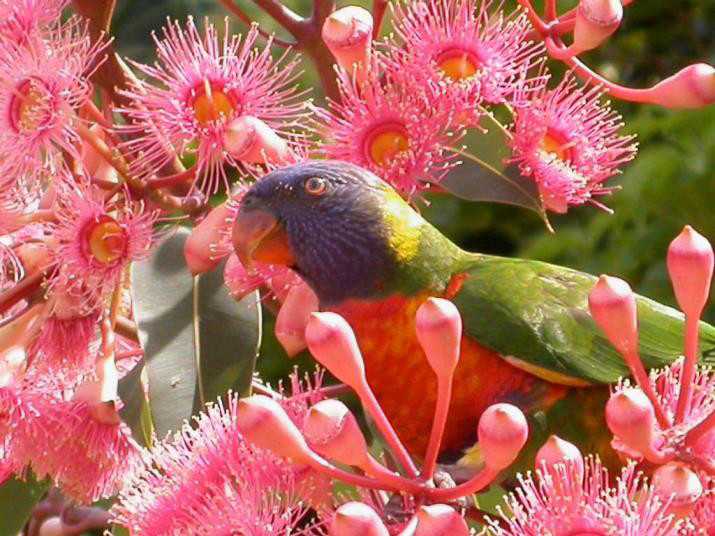
A tough nut to crack…
With thousands and thousands of granivorous, or seed-eating, birds needing rescue and rehabilitation every year, the wildlife rehabilitation community largely does not have access to native seed. Growing Food for Wildlife aims to make this a little easier for wildlife carers while putting on a beautiful show for the public.
Garden therapy…
Well, not quite. Many animal species, such as birds can get very stressed when they come into care. To help keep the animals calm, carers often line the outside of the enclosure with lots of beautiful foliage to emulate that species’ natural environment. This helps to keep the recovery time to a minimum and to get the animal back out to where it is supposed to be, quicker.
If you’d like to see videos of this project, watch Costa on Gardening Australia’s visit or become a volunteer, click on https://www.growingfoodforwildlifeproject.org/.
Our Facebook Page
Linda Pine
The old APS Parramatta-Hills Facebook page will be de-activated soon as we have changed over to a new group page, Australian Plants Society – Parramatta Hills Group
https://www.facebook.com/groups/878507514096665
This changeover was needed as we had received, and are still receiving, messages purporting to have come from Facebook saying we have breached Meta guidelines and threatening to shut us down unless we ‘clicked on the link’ and explained why we shouldn’t be. It’s a bit hard to breach guidelines when the old page hasn’t been used since July, 2024!
There are a lot of old photos etc on that page so if there are any that anyone would like to retain, please have a look in the next couple of weeks as at the end of April we plan on shutting that old page down. This is the link again to the new group page:
https://www.facebook.com/groups/878507514096665
Celebrating the beauty of mangroves
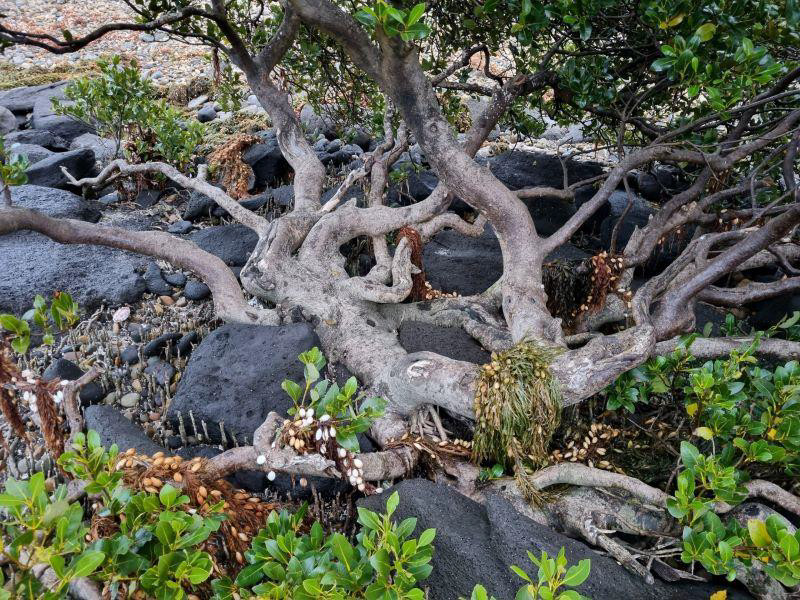
From the NSW Marine website.
Following on from World Wetlands Day on Saturday 2 February, we’re celebrating the beauty of the iconic wetland species, the mangrove.
Mangroves provide essential habitat for thousands of aquatic plants and animals, improve water quality, and stabilise and protect foreshores.
Mangroves support fishing industries by serving as nurseries for valuable commercial species and also play a vital role in collecting and storing carbon.
Growing mostly in muddy sediments on the edge of tidal rivers, where they are regularly inundated by saltwater, mangroves thrive in conditions that would kill most other trees.
They can also be found in beachfront areas, where their aged bark and windblown shapes can be strikingly photogenic.
These beachfront mangroves are often deeply loved landmarks on coastal walks.
Letter to the Editor
From Grahame Forrest
Waratahs, being Australia’s plant emblem, have always attracted me. Early in my gardening career I purchased two Telopea speciosissima plants consecutively. Both died very quickly and I gave up trying just as quickly. I realise that my garden soil, being clay based, did not provide a promising planting medium. I have enjoyed seeing waratahs in bloom in Leura domestic gardens and also in the rocky heights above the sea entrance of the Hawkesbury River.
How could I make it possible for a waratah to grow in my garden?
I have been advised that waratahs have a central root which may be able to penetrate my clay soil; that they also have surface roots which can support the tap root. I have also heard the suggestion that hybrid Australian plants have vigour that exceeds that of the primary species.
My first step was to purchase a plant from a local nursery: Telopea speciossissima x monganensis.
The second step was to take about six bags of planting mix and make a mound into which I planted my purchase with a cupped surface around it to capture water. I watered thoroughly with seaweed mixture.
The plant was watered several times in the first week and then more sparingly. It responded very well: within a month new shoots thrust out. I was happy.
Around three months later I noticed a yellowing of the leaves with the main sap deliverers remaining green. I watered it with seaweed mixture and hoped.
In about one month the plant was dead.
What did I do wrong? Is it impossible to grow waratahs in anything but sandy soil?
Can you please help Grahame?
Koalas
Linda Pine
At our meeting on Saturday 22nd March, we heard from Pat and Lilly Schwartz from Hills-Hornsby Rural Koala Project (HHRKP), which is a volunteer run group working with community to monitor and investigate koala presence in the less-densely populated areas of Hills and Hornsby shires. HHRKP is a sub-group of Cattai Hills Environment Network (CHEN).

HHRKP was established in 2018 after some sightings indicated that koalas may be returning to the area after the 2002 fires. At the time it was not known whether koalas still existed in the Hills and Hornsby areas as they had done historically. HHRKP wanted to establish whether we have a breeding population as we did prior to the 2002 fires and to investigate population density and distribution.
Since 2018 HHRKP has worked with community, building a map of koala sightings, reported by community members. Today the map includes 32 verified sightings and calls heard from recent years, which includes at least 3 females – 2 by call recording in different areas and times and one with testing of scat which showed her to be disease free!! There are also more than 53 anecdotal (non-verified) sighting reports.
The group was lucky enough to have the opportunity to collaborate with Wildseek in 2024, to conduct some thermal drone work, searching for thermal heat signatures. Wildseek is a Wires, Landcare Australia and Queensland University of Technology partnership. 13 koalas were detected over 4 out of the 5 sites flown over by Wildseek.
At this stage all evidence points towards a low-density permanent population of koalas in the Hills-Hornsby rural areas, with more work being done to better understand distribution and population density of the population.
HHRKP believes that understanding more about distribution and population density can be used to help protect koalas from accidents, dog attacks, habitat loss and bush fire. The group also hopes that the koala can be used as a flagship species to advocate for conservation of the bushland, which will protect all the other critically important flora and fauna in the region.
HHRKP wants to get our local koala population recognised by NSW Koala Strategy, which currently does not list Hills/Hornsby or Hawkesbury as koala regions at all.
Koalas use various trees for feeding including Grey Gum (E.punctata) Swamp Mahogany (E.robusta), Red Ironbark (E.fibrosa), Blackbutt (E.pilularis), Mountain Blue Gum (E.deanei) and Yellow Bloodwood (Corymbia eximia) to name a few. They have also been known to use some types of Angophora and Melaleuca.
In addition to koala work, HHRKP is collecting data on local wildlife using song meters, cameras and observations in the bush in order to upload this information onto Bionet. We are in such an ecologically important and biodiverse bushland which endangered and threatened species depend on, and that seems to be under-recognised. Getting the data onto Bionet is an important step toward having this recognised.
HHRKP are also working towards having details regarding the old growth trees found in the area listed onto the Bionet system.
Some examples of the incredible biodiversity of our area, particularly Maroota Forest, include greater gliders, yellow bellied gliders, healthy wombats, pygmy possums, gang gang cockatoos, powerful owls, extensive wetland bird life and much more.
HHRKP is always looking to make contact with community members and to hear whether people have heard or seen koalas in recent years.
You can connect with HHRKP via Facebook pages or CHEN’s website as follows:
https://www.facebook.com/hhrkp
https://www.facebook.com/groups/534808728478674
https://chen.org.au/

HHRKP koala sightings map
APS Harbour Georges River Grand Treasure Hunt on 14th June
Dorothy Luther
I’d like to invite your group to APS HGR Grand Treasure Hunt on June 14th at Lansdowne Reserve. I hope that doesn’t clash with your meeting day.
Lansdowne Reserve is 100 hectares of bush along the Georges River, next to the Hume Highway. It’s one of the biggest bush patches in the HGR area. It has numerous walking tracks and is home to a stand of Acacia pubescens, among other things yet to be discovered.
It has at least four ecological communities, including Cumberland shale plain and sandstone, some endangered, and some transition and overlapping areas. There is also a small lagoon. So, it is quite an interesting area.
By June, the UTS computer science students who are working for me will have created a good overview of the alleged vegetation in the area, based on information in the Atlas of Living Australia. We have a list of 430 plant species – many of them exotics – to sift thru.
We want to get as many people as we can to come along on 14th and walk the tracks, looking for the listed plants, and anything else that looks interesting. It is the most effective way we can think of to ground-truth the students’ study.
I’ll also invite the Oatley Flora & Fauna group. Feel free to invite anyone else you know that might be interested. There is plenty of room for many people in small groups.
Help Wanted to Gather Data
Confused and a little worried about artificial Intelligence (AI)?
Here is your chance to get up close and personal with a real AI system and see just what it can, and can’t, do. We have a team of students in Computing Science at the University of Technology, Sydney working on searching the digitised back issues of the Australian Plants Journal. The system is meant to compile a list of useful traits of native plants local to our area. Useful traits are about propagation and care of the plants. We are particularly interested in plants that are locally uncommon.
We need some help with training the system and reviewing what it finds, to see if it does a good job – that is, finds what it should find and ignores what is not relevant.
All you need to do is scan identified pages of the online journals and compare your findings to the list that the AI system has produced, then report back on any errors. This will help the system to improve its searches. We will start with 5 journals from the 1980s to trial the process, so it might be a nostalgic read for some anyway.
Please contact Dorothy Luther on dlutherau@yahoo.com.au to express your interest.
Bio security officer
Help with reviewing the exotics lists and advise on treatments
Priority weeds lists in MS Word
Share your stories . . .
Your contributions to Calgaroo are always welcome.
If you have interesting observations of plants in the garden or the bush, photos, or any other news, please send them to me at itcox@bigpond.com for the next edition.
* * * * * *
In the spirit of reconciliation, we acknowledge the Traditional Custodians of our Country, the people of the Dharug Nation, whose cultures and customs have nurtured, and continue to nurture, this land since time immemorial. We honour and celebrate the spiritual, cultural and customary connections of Traditional Owners to Country and the biodiversity that forms part of that Country.
* * * * * *
Page 19

Parramatta and Hills District Group
SECRETARY: Jennifer Farrer apsparrahills@gmail.com 0407 456 577
EDITOR: Ian Cox itcox@bigpond.com
Join us on Facebook here
Join us on our websibsite here