Download Jul 2025 PDF file
CALGAROO

A journey into nature

Newsletter of the Parramatta and Hills District Group

Australian Plants Society NSW Ltd

Our vision: inspiring people to admire, grow and conserve native plants
WHAT’S ON IN 2025
| 16 July Wednesday 10am: | Propagation |
| 26 July Saturday: | Bushwalk Jones Road Fire Trail Kenthurst |
| 23 August Saturday: | Visit to Muogamarra NP – details TBA |
| 27 August Wednesday 10am: | Propagation |
| 24 September Wednesday 10am | Propagation |
| 27 September Saturday: | Visit to Boongala Gardens Kenthurst |
| 22 October Wednesday 10am | Propagation |
| 25 October Saturday: | Bushwalk Agnes Banks/ Castlereagh Nature Reserve. Leader Daniel McDonald |
| 19 November Wednesday 10am | Propagation |
| 22 November Saturday | Members’ meeting and end-of-year celebration, Gumnut Hall. Speaker Linda Pine “Using Native Edibles in Cooking” |
| 17 December Wednesday 10am | Propagation |
If you’d like to come to our propagation days at Bidjiwong Community Nursery and haven’t been before, you can get details from Lesley Waite – phone 0438 628 483
* * * * * *
Bushwalk Jones Road Fire Trail Kenthurst
Saturday 26 July 1.30 pm
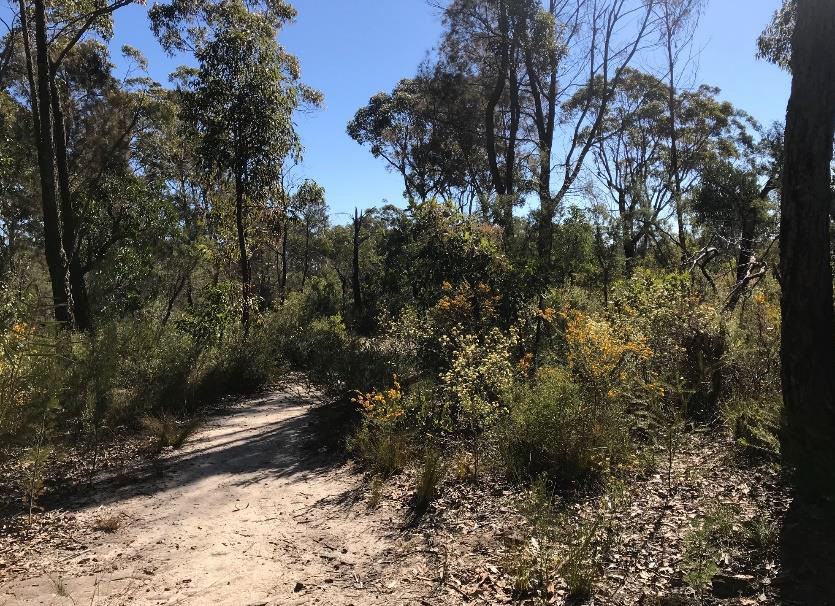
This will be an easy but interesting walk along the fire trail at the end of Jones Road. The flora here on Hawkesbury Sandstone is diverse, and spectacular in places. It should be close to peak flowering time too. Lesley will be leading this walk.
Rare plants include Leucopogon fletcheri subsp. fletcheri (endangered), Darwinia biflora (vulnerable), and Tetratheca glandulosa (vulnerable).
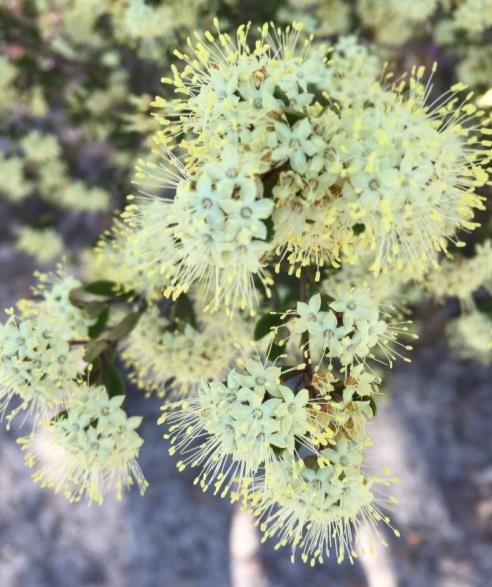
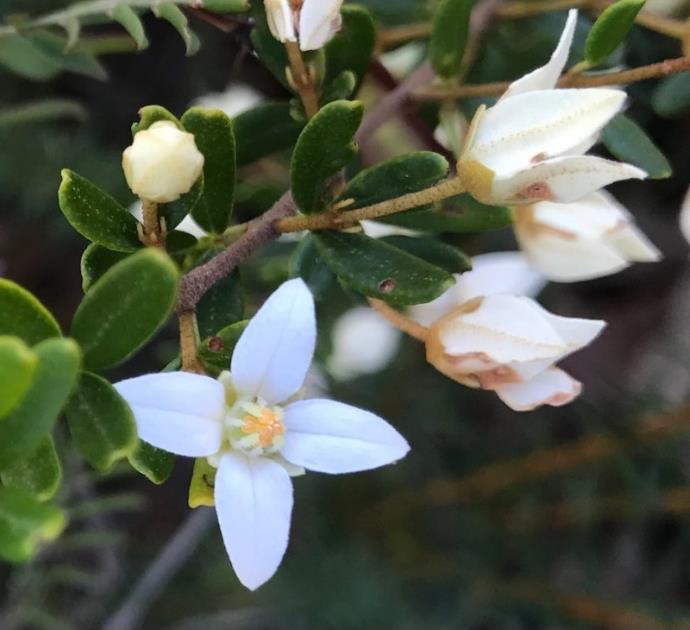
There’s a population of Boronia floribunda with flowers ranging from pink to pure white. Unusual plants discovered on previous walks include a form of Phebalium squamulosum with variegated leaves, and a Boronia rubiginosa with pure white flowers.


Meet at 1.15pm for a 1.30pm start.
Please register your interest in coming on the walk at itcox@bigpond.com
OAM Richard Turner
Some great news. Dick was given this award in the King’s Birthday Honours list this year.
Medal of the Order of Australia (OAM) in the General Division:
Mr Richard James Turner, Lapstone NSW 2773
For service to conservation and the environment.
Glenbrook Native Plant Reserve
- Volunteer, since 1984.
- Former Member, Crown Land Trust
Australian Plants Society New South Wales Blue Mountains Group
- President, 1990-1992; 1994-1996; 2003-2005 and 2008-2011.
- Vice-President.
- Secretary, 1997-2002.
- Publicity Officer, 1993.
- Program Officer, 1986-1988.
- Member since c.1979.
- Life Member APS NSW, since 2017.
BirdLife Australia
- Founding Member, The Capertee Valley Regent Honeyeater Recovery Project, 1993-2023
Volunteer many years, Community.
Life Member APEX Macksville, Professional
Former Forester, New South Wales Forestry Commission.
Well done, Dick!!
Interesting links
Garden plants need stronger regulation to stop weed invasions – from STEP.
For an update on the Melbourne Pollinator Corridor, please click here.
Australia’s native bees struggled after the Black Summer fires – but a world-first solution brought them buzzing back – from The Conversation.
A weird group of boronias puzzled botanists for decades. Now we’ve solved the pollination mystery
Douglas Hilton, Chief Executive, CSIRO
From The Conversation, under a Creative Commons licence.
Boronias, known for their showy flowers and strong scent, are a quintessential part of the Australian bush. They led Traditional Owners to the best water sources and inspired Australian children’s author and illustrator May Gibbs to pen one of her earliest books, Boronia Babies.
But a weird group of boronias has puzzled botanists for decades. They have closed flowers that thwart most insect visitors. Those that do gain entry may encounter alternating sterile and fertile anthers (the male part that produces pollen) and sometimes, an enlarged stigma (the female part that receives pollen). Since the early 1960s, scientists speculated this group of boronias relied on an “unusual agent for effective pollination”. Moths were occasionally mentioned in the botanical literature as potential pollinators, but the full story remained elusive – until now.
As my colleagues and I detail in our new research, moths are indeed the mystery pollinators of this strange group of flowers. This knowledge is crucial to ensuring their long-term survival.

May Gibbs pictured a Boronia Baby hiding inside a Boronia megastigma flower. 2025 © The Northcott Society and the Cerebral Palsy Alliance.
Sweeping plants, far and wide
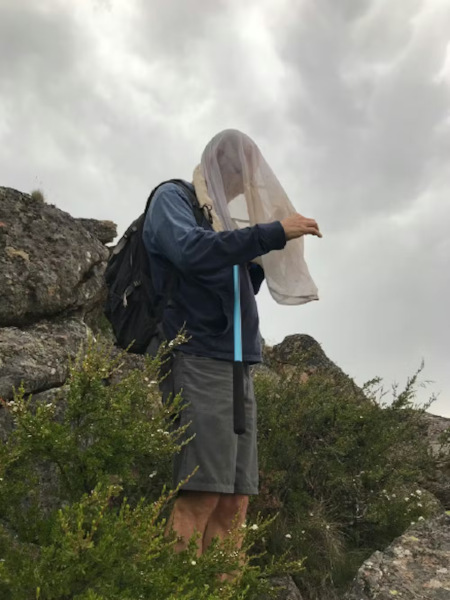
My interest in the boronia pollinators began 15 years ago. I was studying a family of moths in my spare time, with a group of friends.
These moths, called Heliozelidae, are tiny. Their wings are just a few millimetres long, smaller than a grain of rice.
They fly during the day and are seldom attracted to lights, so they are poorly represented in museum collections. The best way to find them is to sweep plants with a butterfly net then look inside it.
After sweeping plants all over Australia, we discovered this country is a hotspot for Heliozelidae. Hundreds – if not thousands – of these species are new to science and yet to be described. In comparison, only 90 species of Heliozelidae have been described from the rest of the world.
We consistently found one group of 15 moth species on the boronias with the weird flowers in the biodiversity hotspot of Western Australia’s South West. Each moth species was found only on a specific boronia species.
When we took a closer look, we found each of the 15 Heliozelidae has an intricate structure at the tip of its abdomen that collects pollen. There’s nothing else quite like this in the 150,000 known species of moths and butterflies. At last, the mystery of the boronia pollinators was solved.
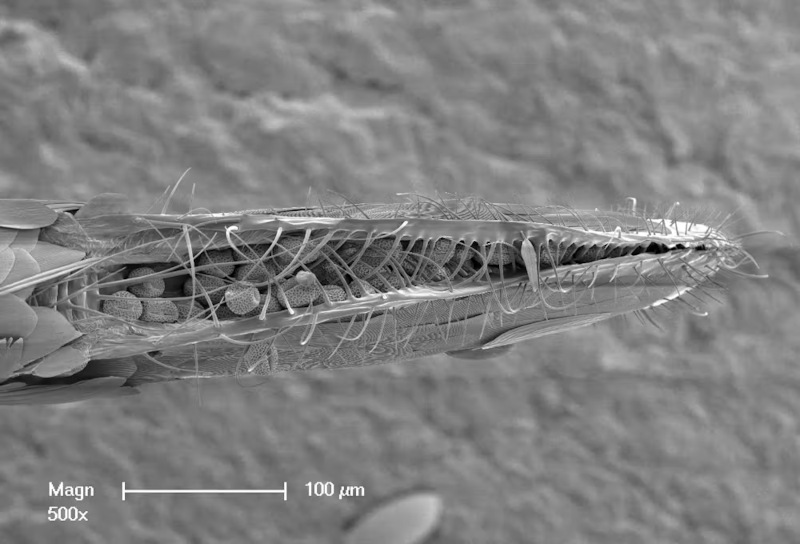
Pollen-collecting structure, replete with pollen, on the dorsal tip of the abdomen of the moth that pollinates Boronia crenulata. Dr Qike Wang
The process of pollinating boronias
In spring, female moths lay many eggs inside flowers. While moving about inside the flower, she collects pollen in the little structure on her abdomen. She enters and exits multiple flowers, pollinating as she goes.
When the eggs hatch, the caterpillars eat some of the flowers’ developing seeds. When they are fully grown, they leave the flower and burrow into the soil to pupate in a cocoon. When they emerge in spring as moths, the flowers are blooming again and the life cycle repeats.
For some species, such as brown boronia, the moths may be the only visitor the flowers ever receive. This suggests the moth and the plant have a reciprocal relationship, depending on each other for reproduction and ultimately, survival.
This is unusual in nature. The poster-child for this type of relationship is the figs and fig wasps.
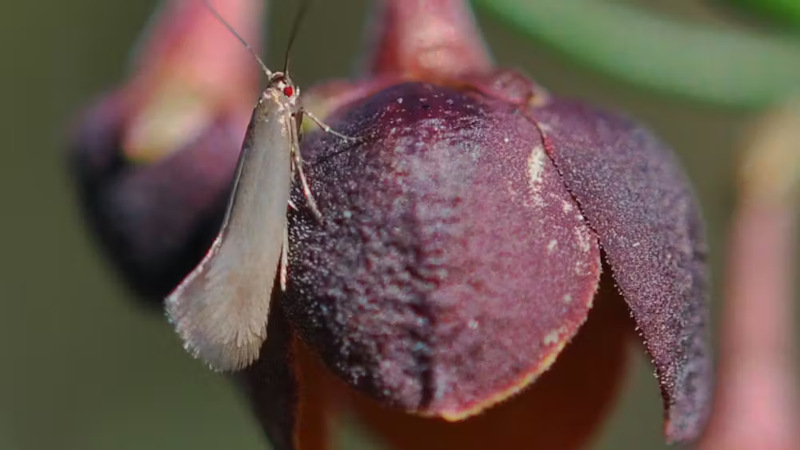
Tiny metallic day-flying moths are the boronia pollinators. Andy Young
What’s in a name?
When a scientist discovers and officially describes a new species in the academic literature, they have to name it. Scientific names have two parts. The first part is the genus or group of closely related species and the second identifies the individual species.
We built a family tree which included the new pollinating moths using their DNA sequences. We showed the pollinators belong to the genus Prophylactis meaning “to guard before”, which previously contained four non-pollinating species. This gives us the first part of the name. For the second part, we used the name of the plant each moth pollinates and added the suffix -allax, meaning “alternately” or “in exchange”. This shows their close relationship to the plant.
So, the moth that pollinates Boronia megastigma is called Prophylactis megastigmallax. The moth that pollinates the endangered Boronia clavata is Prophylactis clavatallax – and so on.
Much to learn
The pollinating moths are more closely related to each other than to other species in the Prophylactis genus. This suggests they inherited their pollen-collecting structure from a long-gone common ancestor.
As with all good science, this
research leads to new questions. For example, we are now studying which moth-plant pairs fully depend on each other.
Other Australian plant species may also have intimate relationships with moths. Current field work is exploring which of Australia’s 486 plant species in the citrus-family (Rutaceae) are linked to moths and how often moths have evolved to pollinate them.
Bush secrets brought to life
Our research shows just how much of Australia’s biodiversity is yet to be understood and protected.
As climate change and land-clearing drive biodiversity loss at an unprecedented rate, this is a challenge we must tackle with renewed urgency. Otherwise our children and grandchildren may only experience the full glory of Gibb’s characters on a page, and not in the natural world.
Boronia Babies on Boronia megastigma 2025 © The Northcott Society and the Cerebral Palsy Alliance.


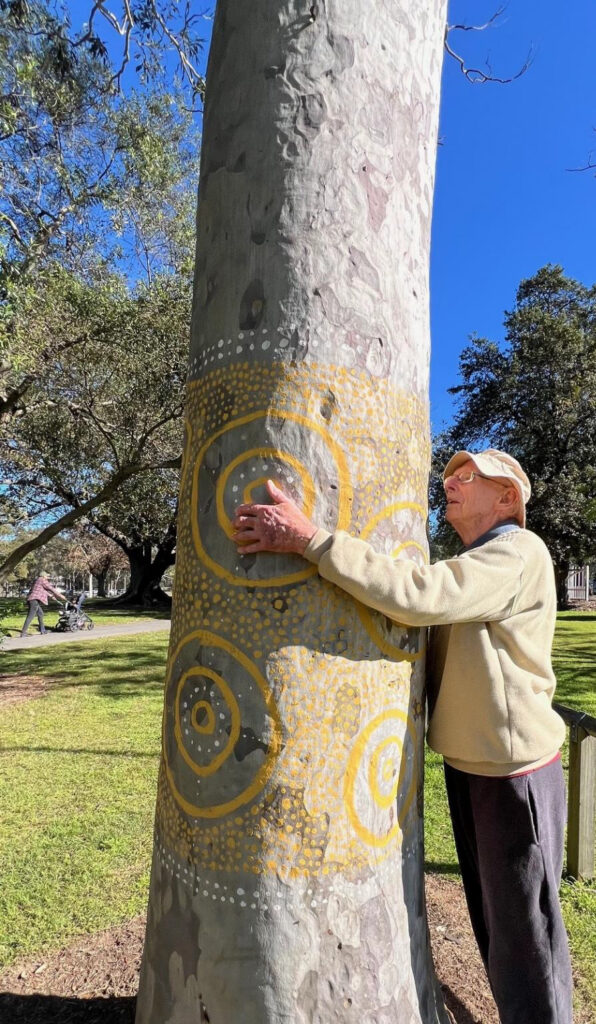
At the end of June we had a family picnic day at Parramatta Park, including a guided tour of Old Government House, which I can highly recommend.
Near Old Government House is a large Eucalypt, on which an Aboriginal artist has created this amazing artwork.
Photos Andrew Cox.

In the heart of the Hundred Acre Wood, life moves a little slower, hugs last a little longer, and friends are everything.
Winnie the Pooh reminds us that you don’t need much to be happy—just a jar of honey, a cozy spot under a tree, and someone you love by your side. He taught us that it’s okay to be a little clumsy, a little lost, or a little late, as long as you’re kind, curious, and full of love.
After all, ‘Sometimes the smallest things take up the most room in your heart.’ So, here’s to simple joys, soft friendships, and the magic of always believing in the beauty of today.
From Gumleaves, newsletter of the APS Hunter Vally Group, June 2025:
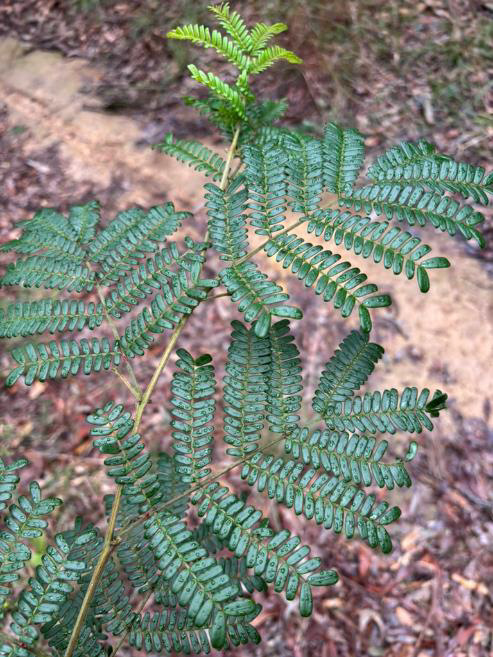
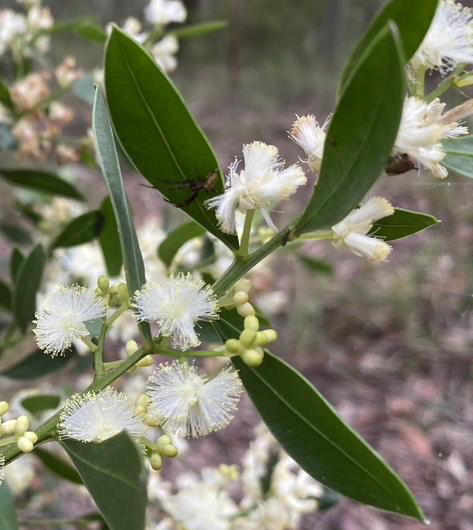
Acacia – Leaves or Phyllodes?
Mark Abel
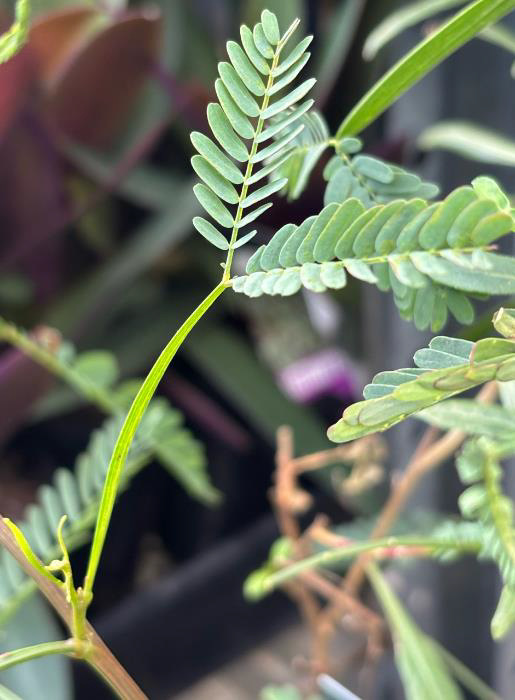
Have you ever noticed that wattles can have two very different types of leaves? One type is a compound bipinnate leaf (feathery looking), and the other type looks more like a normal simple leaf.
It turns out that the simple “leaves” are not true leaves at all, but are rather flattened leaf stalks, modified so that they look and function like leaves. These are called phyllodes.
Around 90% of the Acacia species have phyllodes rather than bipinnate leaves. Like many leafy plant genera, there is a great range of shapes and sizes to be found in Acacia phyllodes. Phyllodes are considered to be an adaptation to dry conditions and helped Acacias spread into drier environments. Indeed, the bipinnate leaved Acacias are generally found in wetter and cooler environments than those with phyllodes.
Of note is that all acacia seedlings start out with bipinnate leaves as young seedlings. For those with phyllodes as adult plants, these get replaced with phyllodes as they grow, and it is possible to observe this transition in young acacia seedlings. The 10% of bipinnate acacias retain their feathery foliage for their entire life. The presence of bipinnate foliage in seedlings is an indication that the ancestral Acacia had bipinnate leaves.
There are also some wattles (e.g. Acacia aphylla) from drier areas that have dispensed with leaves altogether and rely on photosynthesising through their stems.

From Friends of Fred Caterson Reserve – Facebook
You’ve already met some of the other trees here – calm, modest, a bit serious. Well, I’m … not like that.
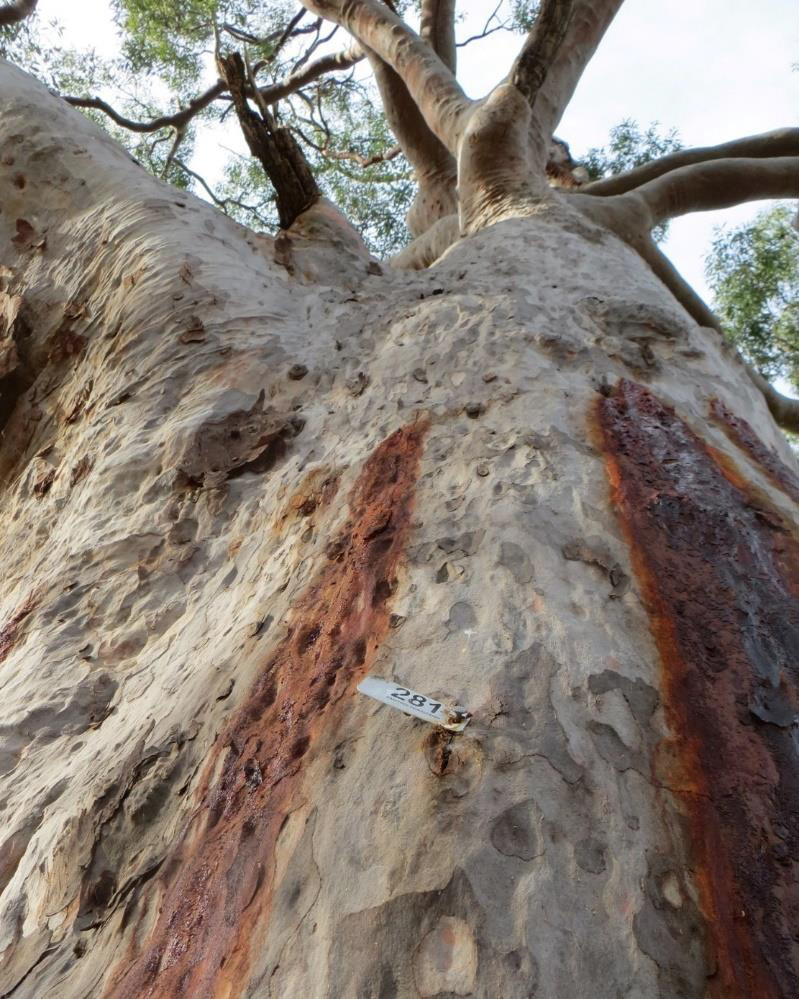
You might have admired me without realising. I don’t blame you. I’m hard to miss. Twisted limbs, copper skin, and a crown that flares against the sky.
Some say I’m dramatic. Maybe. But I’ve been here longer than most, for one. I’ve seen more. And I’ve housed tenants you’ve probably never heard of.
You see, I have hollows. We don’t talk about it much, but when you’ve got hollows, you tend to get noticed. I provide prime bushland real estate!
And that’s a big deal, especially in a place where tree hollows are rare. I’ve been working on mine for over a century. They’re so special that, on a day almost two years ago during the wrong season for most, the ecologist still spotted Rainbow Lorikeets darting in and out of mine.
They didn’t see everything of course. Their cameras only reached seven metres. My biggest hollows? Much higher than that. Naturally.
I am Tree 281, one of 411 trees listed in an arborist’s report for removal, or impact, under the plan for new playing fields in Fred Caterson Reserve. I’m also one of seven trees surveyed with hollows.
I’m not ready to be forgotten. If you believe trees like me should be protected for the homes they hold, help me be seen. Like, share, or speak up.
• Species: Sydney Red Gum / Smooth-barked Apple (Angophora costata)
• Height: 18m
• Spread: 22m
• Diameter at Breast Height: 1050mm
• Age: Mature
• Vitality: Good
• Condition: Fair/Good
• Landscape Significance: High
• Retention Value: Medium
• Useful Life Expectancy: Medium
To be removed for: spectator seating for main rugby union field!! Really??
Enjoying the Wildflowers and the Birds
Ricki Nash
One of the nice things you can enjoy when out admiring the wildflowers is having the opportunity to watch the birds coming for the nectar and in the process pollinating the flowers as they flit between blossoms.
Besides our group outings along the Quarry Road track enjoying the vast array of flowering plants, there are a few other local sites such as Agnes Banks Nature Reserve and Castlereagh Nature Reserve which are well worth a visit, especially during Spring and at other times when a great variety of eucalypts are either flowering or about to flower shortly, such as Yellow Bloodwood (Corimbia eximia).
Agnes Banks and Castlereagh Nature Reserve (NR) together with Windsor Downs NR and Scheyville National Park and Pitt Town Lagoon are all part of the Richmond Woodlands Key Biodiversity Area (KBAs) which are places where habitats or ecosystems are conserved for threatened species as identified by the IUCN Red List. Worldwide there are 18,000 KBAs and in Australia there are 334 sites. Some of the biodiversity hotspots in this country include the SW corner of Western Australia, Tasmanian Midlands, Fitzgerald River/ Ravensthorpe also in WA and the Border Ranges between Queensland and NSW.
Recently new informative signage was installed as part of a public engagement project by Birdlife Australia together with Birdlife Southern NSW with support from NPWS.

At the beginning of each of the Richmond Woodlands’ KBA tracks, the signage informs visitors and Citizen Scientists about what they can do to help not just wildlife including the birds, but also insects and flora. The sign displays where the walk starts and ends for the purpose of surveying and the species of birds which may be seen. The trigger species are the Critically Endangered Swift Parrot and the Regent Honeyeater.
Ricki Nash who is also a member of Parramatta/ Hills APS has just become one of the Guardians of the Woodlands, a role she shares with Roger Griffiths who undertakes much of the on ground promotional work such as leading surveys, presentations and recently was interviewed on the Hawkesbury Eco Hour radio station (89.9 FM) by Eric Finley, himself a bird watcher.
We have also presented at the recent Birdlife Southern NSW AGM speaking about the KBA and this can be viewed on YouTube where the title of our talk is “Richmond Woodlands KBA Public Engagement Project by Ricki Nash and Roger Griffiths”.
All bird observations are recorded using the Birdata App which can be accessed by using the QR codes on the signage using either your iPhone or Android. Other fascinating wildlife are recorded via iNaturalist including native plants and weeds. There is about 20 years of birdwatching data already recorded and Macquarie University students working with Dorothy Luther, her partner who is an ecologist and the former Guardian Ian Bailey are in the process of compiling the stats.

Ricki and Roger at the sign in Scheyville National Park
If you think you might like to take in a spot of birdwatching and also look at native plants, our surveys occur on a monthly basis, so feel free to contact Roger : Mobile: 0409 305 068 or via email : roger.n.griffiths@gmail.com to book.
The next walks are scheduled for :
• Friday 25th July to Castlereagh NR,
• Friday 29th August to Agnes Banks NR
• Friday September 12 to Scheyville NP.
Otherwise just take yourself and a few friends and enjoy some time in the bush with the wildlife and floral displays!
Click here to see our stories about Growing Waratahs on the APS NSW website.
General Meeting- Saturday June 28.
Ricki Nash
Our guest speaker was Brian Roach, who shared his interest and expertise with us about “Amazing Greys”, and the importance of planting groundcovers, shrubs and trees with grey foliage in the garden.
Brian has previously published on this very topic on the Australian Native Plants website, and the article has been reproduced several times. However, following Ian Cox’s invitation to speak at the Meeting, he shared that this was the first time he’d spoken to a live audience about the importance of these coloured plants and his experience with propagation.
The title of his talk “Amazing Greys” came about because Brian has sung regularly in a choir and the song “Amazing Grace” is one of his most favourite songs. To the delight of all present, Brian commenced his talk by singing a verse to the tune of Amazing Grace referencing Amazing Greys! It was a real pleasure to have the opportunity to listen to him sing!
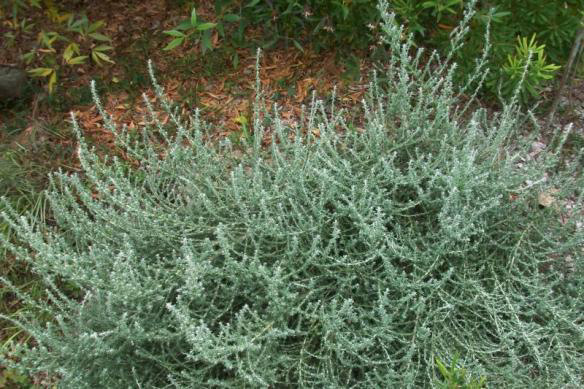
Planting shrubs that have either grey or white foliage is very important when making choices about what to plant where in the garden, not just for colour, but also considering the leaf shape and size, aspects which will be complementary and visually enhance the vegetation growing nearby.
Brian then shared about a variety of species he has seen and grown from cuttings over the years together with a range of beautiful photographs.
Some of these plants included:
• Eremophila glabra– aka Kalbarri Carpet. This variety can cope with extreme heat and has striking ochre-coloured flowers. It tends to grow well in Sydney and is easy to propagate.
• Some years ago, when Brian was travelling in the Broken Hill area, he saw Maireana oppostifolia and Maireana sedifolia (aka bluebush or pearly bluebrush) growing all over the surrounding hillsides. He thought oppostifolia would make for a good cut flower and it also strikes easily from cuttings. Likewise, sedifolia which Brian brought along with him and these were for sale.
• Olearia languinosa aka “Ghost Town” (photo right). In the garden it provides a great foliage contrast with other plants, has an incredible fragrance when cut or crushed, tends to root from nodes and strikes easily.
• Actinotus helianthi aka White Flannel Flower can be bought as seeds and then scattered throughout the garden, in rockeries or planted where they can form large drifts. Its silvery grey foliage is striking against its velvety white and green-tipped petals. It tolerates a wide variety of soils, but prefers ones which are sandier.
• Chrysocephalum apiculatum aka Common Everlasting and Yellow Buttons varies in height (60 cm) and width (1m), and some forms have fleshy leaves whilst others have narrow leaves. The leaves are covered in fine silky hairs which give the appearance of grey- green foliage. The plant flowers in late winter and these are golden-yellow in colour. It is easy to propagate.
In 2019, Gardening Australia came to visit Brian in his garden at Westleigh and Costa asked him about Eremophila nivea which he had never seen before. The plant was putting on a marvelous “show” at the time, so Brian reminded him that the name Eremophila came from the Greek word meaning “desert loving”. The plant Brian had was a grafted specimen. However, Ian Cox also has a lovely example in his front garden and advised that he was able to propagate it from cuttings.
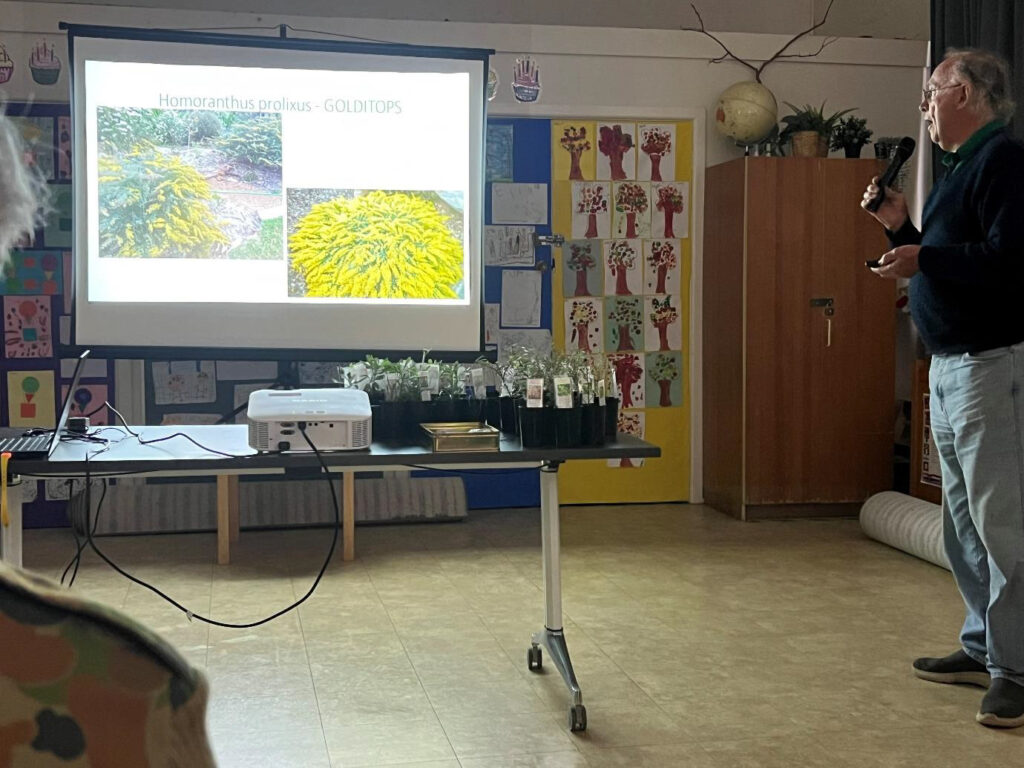
Brian’s home is on the side of a hill without a front fence, and he shared this is one of the joys of gardening because as people walk by, they often stop and ask him about his plants.
• Senna artemisioides aka Silver Cassia belongs to the Fabaceae family and is endemic to Australia. It can be seen by passersby growing along the edge of the curb near the QANTAS Museum at Longreach in Queensland. It is about 3m high and has yellow flowers.
• Grevillea “Spider Mist”- areanaria x fireworks. This a medium-size compact shrub which grows to about 2m high, and 2m wide which Brian grew from a seedling in his garden, and has since been registered with the Australian Cultivar Registration Authority (No.1539) in Nov. 13, 2015 as Grevillea “Spider Mist”.
• Zieria cytisoides “Grey Ghost” This plant prefers shady areas and is difficult to propagate.
• Phebalium stenophyllum. aka Narrow- leafed Phebalium. This is small shrub with bright yellow flowers and it is endemic to SE Australia. Propagates easily from cuttings.
• Leucophyta brownii aka Cushion Bush. Commonly seen growing near the lookout to the 12 Apostles on the Great Ocean Road Vic.
• Homoranthus prolixus aka Granite Homoranthus. A small spreading shrub up to 2m in width and 0.3m in height, found on the NW slopes and tablelands of NSW near Inverell and Bendemeer. Grows in shallow soils near granite outcrops where there is heath and dry sclerophyll woodlands. Leaves are fragrant when crushed and the flowers are brilliant yellow. It can be obtained from the Mole River Nursery at Tenterfield NSW.
• Conostylis candicans aka Silver Sunrise. Easy to grow from cuttings. The plant has silvery grass- like foliage and golden balls of yellow flowers throughout spring. It is used as a border plant. Conostylus aurea is a similar species and after some discussion with members, Brian said he has not had any confirmation these species were sold commercially via Flower Power.
Following Brian’s talk, the next two meetings were discussed.
• July’s outing (26/7) will be a walk along the Jones Road Fire Trail in Kenthurst looking for early wildflowers and flowering eucalypts. Members are to meet Lesley Waite at 1.15pm at the beginning of the track for a 1 30pm start. The walk is fairly flat with just a short rise when returning to the cars. Jones Road is off Kenthurst Road in Kenthurst. At the roundabout the Uniting Church is on one corner and directly opposite are the grounds of Kenthurst Primary School. Just drive to the end of Jones Road and park.
• On August 24, some members will be going on a self-guided walk in Muogamarra Nature Reserve to enjoy the wildflowers. Those who still owe money for the entry fee and car space are to send their monies by EFT to the treasurer Pip Gibian using the account details forwarded to you in a separate email from Ricki Nash. Further details will be provided to those attending closer to the date.
For members who would still like to come to Muogamarra, there were still vacancies noted on the website on Saturday, but you will have to do the booking yourself.
Everyone then enjoyed afternoon tea together and bought some plants from our Nursery and also some of Brian’s to take home for their gardens.
From Wild Blue Mountains.
The Many Faces of Silver Banksia
Banksias are currently flowering throughout suitable Blue Mountains bushland habitat, Banksia ericifolia and Banksia spinulosa being two of the larger orange-flowered species now in bloom.
The Silver Banksia (Banksia marginata) is also putting on a show, with these specimens photographed within a few metres of each other in Mount Victoria.
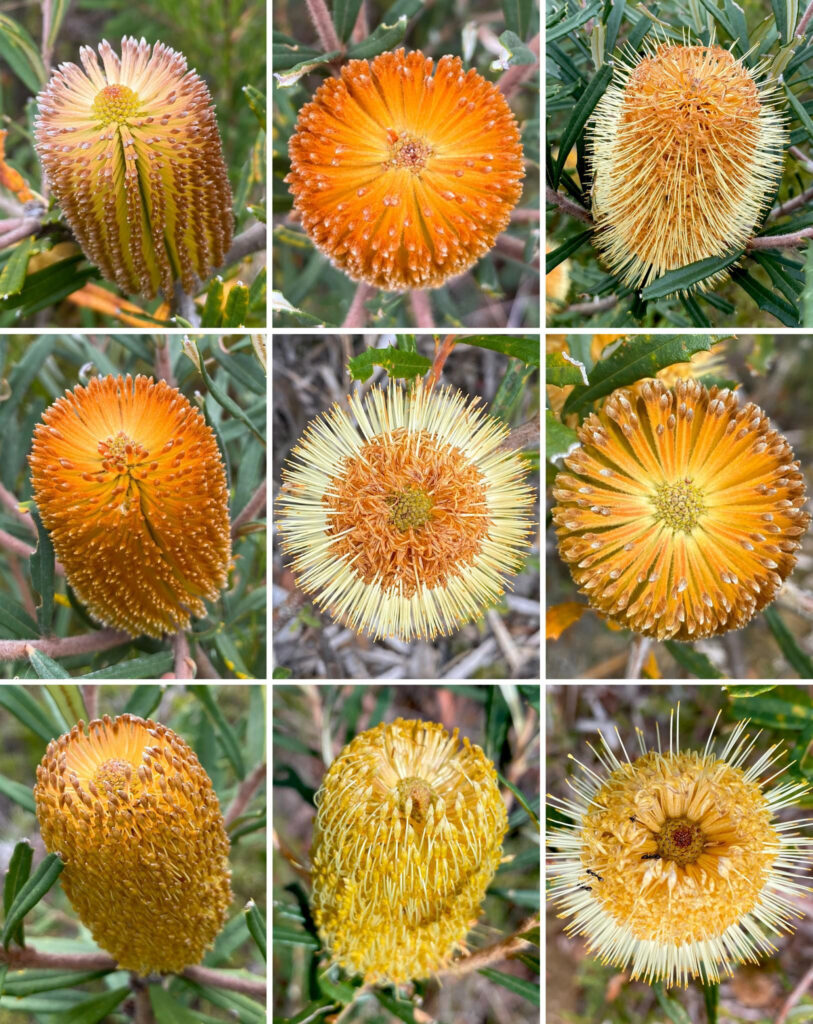
At 10cm in length, the spike (flower) of the Silver Banksia is the smallest of the local species. The flower spike is generally a pale lemon colour, but it can vary in colour and form as it opens (shown in the photos below). This process, known as anthesis, is the period during which a flower develops from the bud stage to be fully open and functional.
The Silver Banksia flowers from late summer to early winter, and can be found from South Australia through to Northern New South Wales, and Tasmania. The name Silver Banksia comes from the underside of its leaves which appear silvery when the sun shines on them.
Share your stories . . .
Your contributions to Calgaroo are always welcome.
If you have interesting observations of plants in the garden or the bush, photos, or any other news, please send them to me at itcox@bigpond.com for the next edition.
* * * * * *

In the spirit of reconciliation, we acknowledge the Traditional Custodians of our Country, the people of the Dharug Nation, whose cultures and customs have nurtured, and continue to nurture, this land since time immemorial. We honour and celebrate the spiritual, cultural and customary connections of Traditional Owners to Country and the biodiversity that forms part of that Country.
* * * * * *

Parramatta and Hills District Group
SECRETARY: Jennifer Farrer apsparrahills@gmail.com 0407 456 577
EDITOR: Ian Cox itcox@bigpond.com
Join us on Facebook here
Join us on our websibsite here