DownloadMay 2025 PDF file
CALGAROO

A journey into nature

Newsletter of the Parramatta and Hills District Group

Australian Plants Society NSW Ltd

Our vision: inspiring people to admire, grow and conserve native plants
WHAT’S ON IN 2025
| 21 May Wednesday 10am: | Propagation |
| 24 May Saturday: | Bushwalk Waterfall Walk West Pennant Hills. Leader Jennifer Farrer |
| 18 June Wednesday 10am | Propagation |
| 28 June Saturday 2pm: | Members’ meeting Gumnut Hall Speaker Brian Roach “Amazing Greys” |
| 16 July Wednesday 10am: | Propagation |
| 26 July Saturday: | Bushwalk Jones Road Fire Trail Kenthurst |
| 23 August Saturday: | Visit to Muogamarra NP – details TBA |
| 27 August Wednesday 10am: | Propagation |
| 24 September Wednesday 10am | Propagation |
| 27 September Saturday: | Visit to Boongala Gardens Kenthurst |
| 22 October Wednesday 10am | Propagation |
| 25 October Saturday: | Bushwalk Agnes Banks/ Castlereagh Nature Reserve. Leader Daniel McDonald |
| 19 November Wednesday 10am | Propagation |
| 22 November Saturday | Members’ meeting and end-of-year celebration, Gumnut Hall. Speaker Linda Pine “Using Native Edibles in Cooking” |
| 17 December Wednesday 10am | Propagation |
If you’d like to come to our propagation days at Bidjiwong Community Nursery and haven’t been before, you can get details from Lesley Waite – phone 0438 628 483
* * * * * *
Waterfall Walk, West Pennant Hills
Saturday 24 May at 1.30pm.
Jennifer Farrer
Our next walk is one that the Group has done before, but not for a few years. It is one of my favourite Hills Walks.
The walk starts at Richard Webb Reserve in Aiken Road West Pennant Hills. This is a small pocket of Blue Gum High Forest on the banks of Darling Mills Creek. We will then cross Heide Place and enter Bidjigal Reserve, still following the Darling Mills Creek. The vegetation here is sandstone gully forest, and the gully becomes quite deep with towering sandstone cliffs above. It is hard to believe here that suburbia is close by. The landscape then opens out into open Peppermint Gum Woodland. After crossing Bue Gum Creek, we will reach our destination, the only waterfall in The Hills below a lovely rock pool.
Meeting Place: Richard Webb Reserve, Aiken Road, West Pennant Hills. There is no car park, but it is quite safe to park in Aiken Rd outside the reserve.
Distance: 3.1km
Grade: The walk is along a well-graded fire trail with a gradual descent and ascent.
Start Time: 1.30pm. Aim to be there by 1.15. The earlier time has been set because the days are quite short at this time of the year. Also, Linda Pine has invited us to afternoon tea at her place nearby after the walk.
Wear closed shoes and bring water.
Register your attendance at apsparrahills@gmail.com
Muogamarra Nature Reserve in August
Ricki Nash
There are 900 species of amazing wildflowers at Muogamarra Nature Reserve, and we hope to be able to get there to see this colourful display of waratahs, native orchids, pink eriostemons and boronias. There is also plenty of wildlife and great views over the Hawkesbury River.
The Reserve is about 3 km north of Cowan and is only open for 6 weeks a year between August and September. To gain access, we have to pre-book either a guided tour with one of the experienced NPWS volunteers or a self-guided tour. Self-guided tours apparently occur on any of the Sundays the Reserve is open and a few select Saturdays.
Our group is looking at booking a self-guided tour either on Saturday, 23rd August or Sunday, 24th August
As bookings open in mid- June, could members who are interested in coming along please send your names and contact details to me before June via one of these methods:
- email- nashj_e@bigpond.com, or
- ring and leave a message or send a text message to 0419 626 848
As I’m unsure of the cost at the moment, once we make the booking, there may be some information regarding payment on the website, and I’ll let you know
Trail Bike Squad
Steve Douglas– from Facebook post 19 April 2025
Driving around the Highlands today for fieldwork to beat the forthcoming wet weather, it was very sunny and warm, unseasonably so, and the highest temp I recorded under credible conditions was 28 °c around Berrima to Belanglo.
As a bonus, I met two decent-sized blokes on trailbikes who drove out of the bushland where I’d been working, drove across a rock wall intended to deter such access and 4WDs, and then started to chat with me. I normally don’t engage with fellas on trailbikes as they’re often doing the wrong thing in the wrong place, but these guys were interested in what I was doing (rare plant monitoring).
Turns out they’re part of the Trail Bike Squad – police who patrol to detect and deter illegal riding and driving on public land. No uniforms, no logos, nothing to identify them as police, so I was slow to believe them, until one gave me enough info, and showed me he was armed, that I accepted their story. We had a good chat, and he gave me his card so I can let him know about where there are legally protected species that are being harmed by recreational vehicle misuse. They’ll use this where they can to focus on activities in those areas.
They are deliberately not readily identified as police so that illegal riders won’t drive away from them at speed, which is potentially dangerous. Instead, the offenders are more likely to engage with fellow riders, and will then be told if they’re not permitted in that area or if they’re riding an unregistered bike, etc. I assume that offenders could be required to show ID and could be fined. But chasing them is not allowed, though I know that in some situations, like the closed water catchments, police will follow the offender from the air, then send a vehicle around to wherever they emerge or when they reach home.
The species I was monitoring at that site is Helichrysum calvertianum, and as a bonus I found Grevillea raybrownii, Persoonia glaucescens and P. levis x linearis. Sylvia (my mum) found a Glossy Black Cockatoo feed tree, and I found some Yellow-bellied Glider feed trees – only old scars, which is mostly what I find. Fresh or recent scars are now extremely rare here.
“The best time to take cuttings is . . . when you’re there!”
-Ross Doig
From trading nutrients to storing carbon: 5 things you didn’t know about our underground fungi
Adam Frew, Lecturer in Mycorrhizal Ecology, Hawkesbury Institute for the Environment, Western Sydney University. From The Conversation.
If you’re walking outdoors, chances are something remarkable is happening under your feet. Vast fungal networks are silently working to keep ecosystems alive.
These fungi aren’t what you might picture. They are not mushrooms, or brightly coloured growths on tree trunks. Arbuscular mycorrhizal (AM) fungi look like spools of thread wrapped around plant roots.
What makes these fungi remarkable is the deal they struck almost half a billion years ago with another kingdom of life – plants.
AM fungi make threads of hyphae thinner than spider silk and weave them through plant roots. Then, they begin to trade, offering plants water and phosphorus, a vital plant nutrient in soils. In return, plants offer carbon-rich sugars and fats from photosynthesis. Fungi can’t photosynthesise, but plants can.
This symbiotic relationship can help plants survive periods of drought and live in nutrient poor soils. More than 80% of all plant families rely on these fungi, while AM fungi cannot live without plants.
Without these fungi, many of Australia’s plants — and the soil they grow in — would be in real trouble. Our continent is ancient, dry, and nutrient-poor. But while we monitor the fate of plants and animals in response to human impact and climate change, we haven’t been tracking the fungi that support it all. We don’t even know how many species there are, let alone if we’re losing them.

To help fill this gap, I have developed the first dedicated database recording species and distributions of AM fungi in Australia – AusAMF.
Arbuscular mycorrhizal (AM) fungi form networks of thin filaments, creating living pipelines connecting plants and the soil. The fungi are vital to most terrestrial ecosystems.
The underground economy of roots and filaments
AM fungi deserve to be better known. These essential companions to most of the world’s plants maintain plant diversity, suppress invasive species, store carbon, cycle nutrients and prevent soil erosion.
Here are five remarkable things about AM fungi:
- They’re older than roots
Incredibly, this fungus-plant symbiosis emerged before plants evolved roots some 360–420 million years ago.
AM fungi have been around for 475 million years, partnering with very early land plants such as the ancestors of today’s liverworts – which have no roots. This ancient alliance actually helped plants colonise land. - They can boost native plants and reject invasives
AM fungi do more than transport nutrients, carbon and water. They shape entire plant communities. Some plants benefit more than others, influencing competition and species co-existence. By giving some species a competitive edge, AM fungi allow some plants to survive which might otherwise be lost.
When AM fungal diversity declines, it can lead to a loss of native plants and open the door to invasive plant species.
But with the right management — such as reducing pesticides or reintroducing locally adapted fungi — AM fungi can boost plant nutrition and ecosystem restoration. They can help native vegetation recover and stop invasive species from gaining a foothold.
- They run an invisible underground economy
The fungi-plant trade is more organised than you might think.
In some instances, plants reward the fungi giving them the most phosphorus with more carbon, while the fungi prioritise plants offering them the most carbon – a bit like a marketplace. Some plants have figured out how to cheat the fungi, taking resources without giving anything in return.
This high-magnification video shows water and nutrients flowing inside the hyphae of the AM fungus Rhizophagus irregularis. https://youtu.be/_AltpTG5FiE
Source: Oyarte Galvez et al. (2025) Nature - They boost plant defences against pests and disease
Fungi don’t just help plants grow; they help them fight. As AM fungi colonise a plant’s roots, they boost its defences against threats such as diseases and plant-eating insects by strengthening and speeding up chemical responses. My research shows the size of this fungal-defence boost for plants can depend on what AM fungi are present.
And if one plant is attacked, it puts out chemical signals which can move through the fungal network and let other plants know to ready their defences. - They take in vast amounts of carbon
Plants take carbon from the atmosphere and store it in their leaves, roots and wood. But AM fungi store carbon from plants too.
Because mycorrhizal fungi are found wherever there are plants, their underground networks are vast – and so is their carbon impact. Recent research estimates the annual figure is more than a third of global fossil fuel carbon emissions.
Vitally important, all but unknown
If AM fungi vanished, many plant species would likely follow suit. Others would become more vulnerable to drought, disease, and pests. Soil would erode more easily, and nutrient and carbon flows would shift dramatically.
Are they in trouble? We don’t know. AM fungi are out of sight, out of mind. No federal or state government agency seem to be tracking them. Our current National Soil Action Plan doesn’t mention fungi at all, despite their importance to soil health.
Other than Antarctica, Australia is the least sampled continent for soil AM fungi, with just 32 sites in global databases. Europe, by comparison, has data from more than 1,200 sites.

AM fungi help plants grow better. On the left is grass in symbiosis with AM fungi with visible white hyphae. On the right is grass without the fungi. Soil Ecology Wiki, CC BY
That’s where I hope the AusAMF database will help. I partnered with landholders and research networks to gather soil samples. So far, the database has data from 610 locations, with about 400 more on the way.
But this is still scratching the surface. AM fungal communities can differ between neighbouring fields or habitats, depending on land management methods and types of vegetation. Virtually all current records are a single snapshot in time — we lack the long-term monitoring needed to track seasonal or annual changes.
This map shows the locations with recorded arbuscular mycorrhizal fungal diversity data in the AusAMF database. Author provided.

It would be a mistake to remain in the dark about AM fungi. The more we learn, the more we see their importance, not only in supporting biodiversity, but in helping our crops and ecosystems cope with a changing world. If they are in decline, we need to know – and set about protecting them.
This vanishing world . . .
“. . . This vanishing world is beautiful beyond our dreams. It contains in itself rewards and gratification never found in the artificial landscape, or man-made objects so often regarded as exciting evidence of a new world in the making. . . The natural world contains an unbelievable diversity, and offers a variety of choices, provided of course, that we retain some of this world . . .”

Photo Elspeth Hope-Johnston
Olegas Truchanas, at the opening of his photographic exhibition ‘Lake Pedder 1971’ at Richmond, Tasmania. As he spoke, the waters of Lake Pedder were already rising, the lake changed forever.
To go to the Restore Lake Pedder website, please click https://lakepedder.org/
“The task of shifting the current trajectory of biodiversity decline and ecosystem collapse to one of nature repair is incredibly urgent and important.”
–Professor Michelle Leishman
Interesting link
It’s not easy being a street tree, but this heroic eucalypt withstands everything we throw at it – from The Conversation.
Sid Cadwell
Malcolm W. Johnston
Sid Cadwell was a pioneer in the growing of Australian plants.
He was born to Henry and Jessie Cadwell of Porters Road, Kenthurst in 1912. He attended Kenthurst Public School in 1922. His family moved to “Welwyn’’ on Pitt Town Road, where he worked on his parents’ farm.
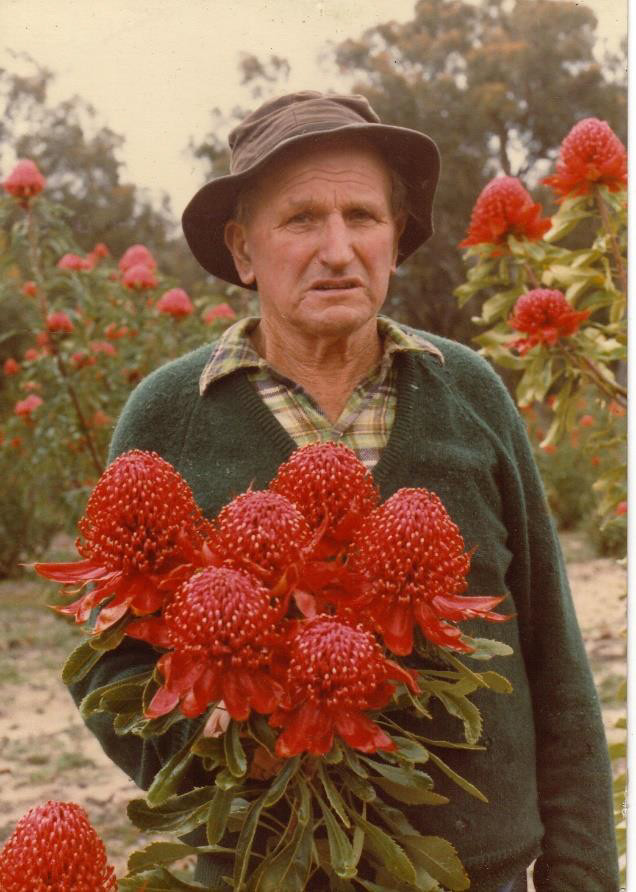
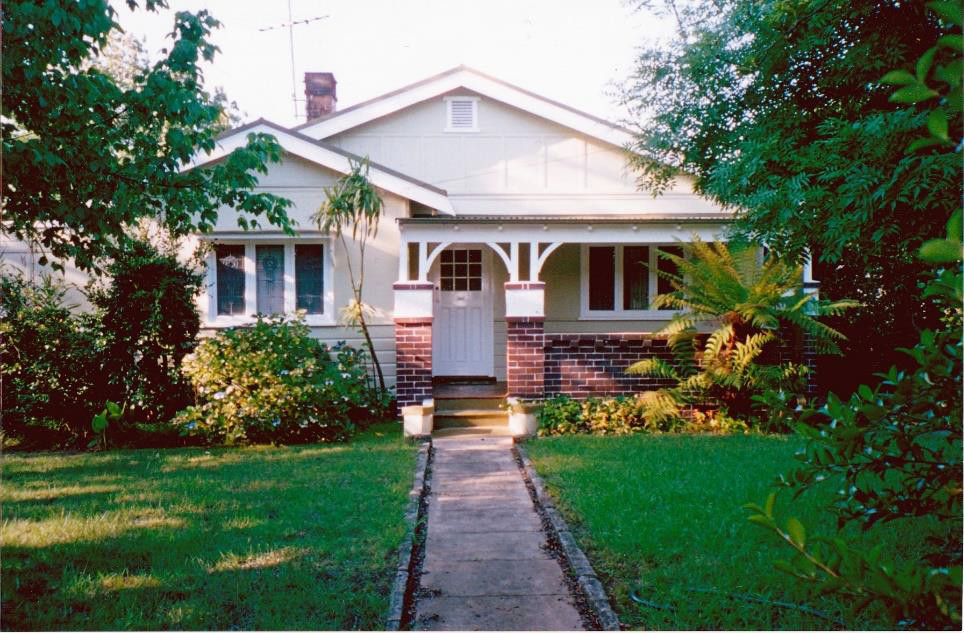
Sid moved to Annangrove in 1947, where he planted citrus and apple trees on his property. His home was a tin shed and still stands on the site where the Racquet Centre now stands. He grew tomatoes and cucumbers until his fruit trees matured. He also did tractor work for other local farmers.
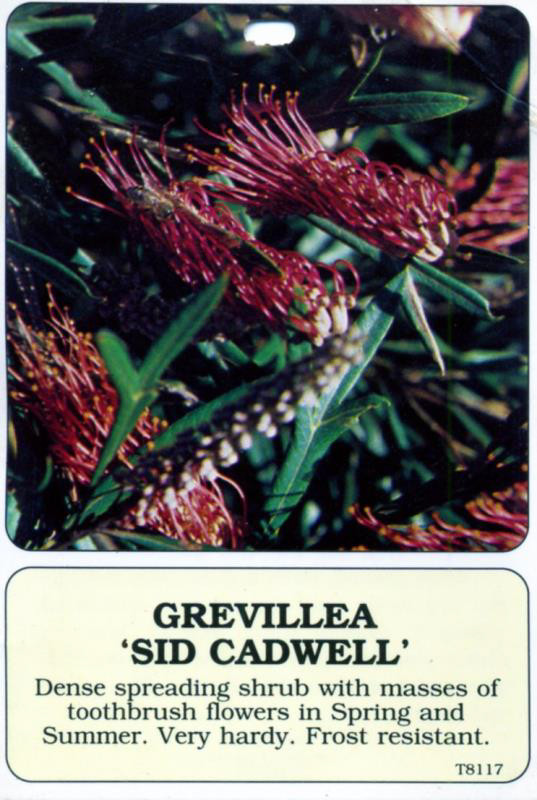
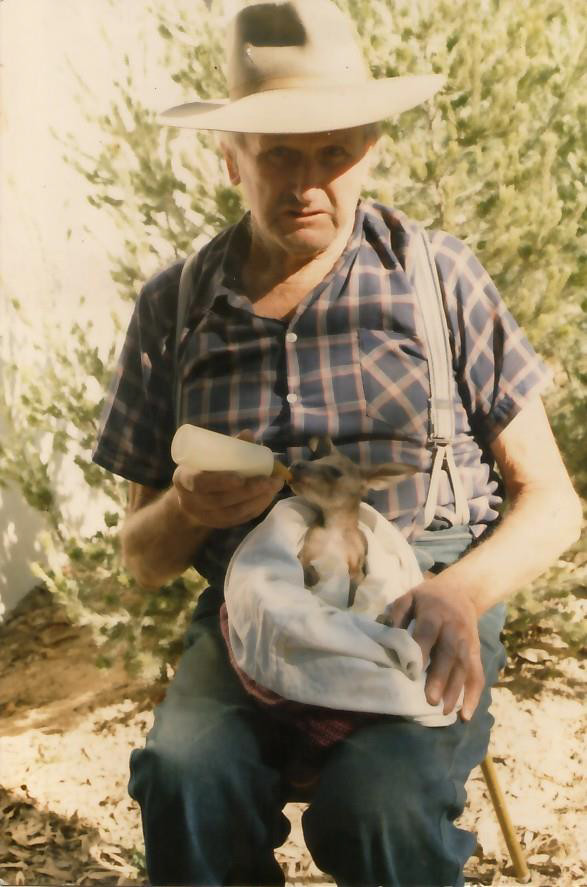
Sid then took an interest in native plants; he enrolled at the Ryde School of Horticulture in 1962. His teacher was Thistle Y. Harris, a renowned naturalist of that time. Sid constructed gardens and planted many rare and obscure species. These gardens became known as “Boongala Gardens”. Sid then started selling to the public. He travelled Australia-wide collecting seeds and cuttings. Some new Grevilleas were bred on his property; three of these were “Boongala Spinebill”, “Jessie Cadwell”, after his mother, and Grevillea “Sid Cadwell”, after himself. Sid was the first person in NSW to propagate Grevillea “Robyn Gordon”. While at “Boongala Gardens”, Sid was always accompanied by his kangaroo named Skip.
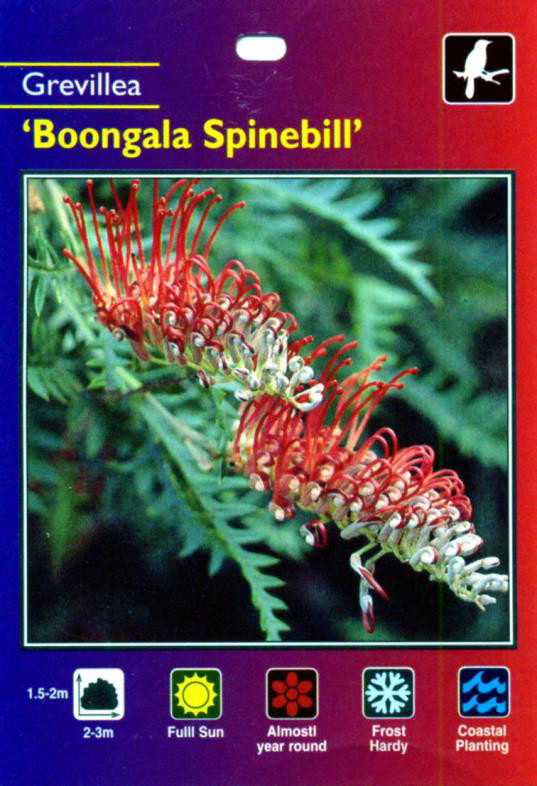
“Boongala” means shaded place.
Spinebill refers to Eastern Spinebill.

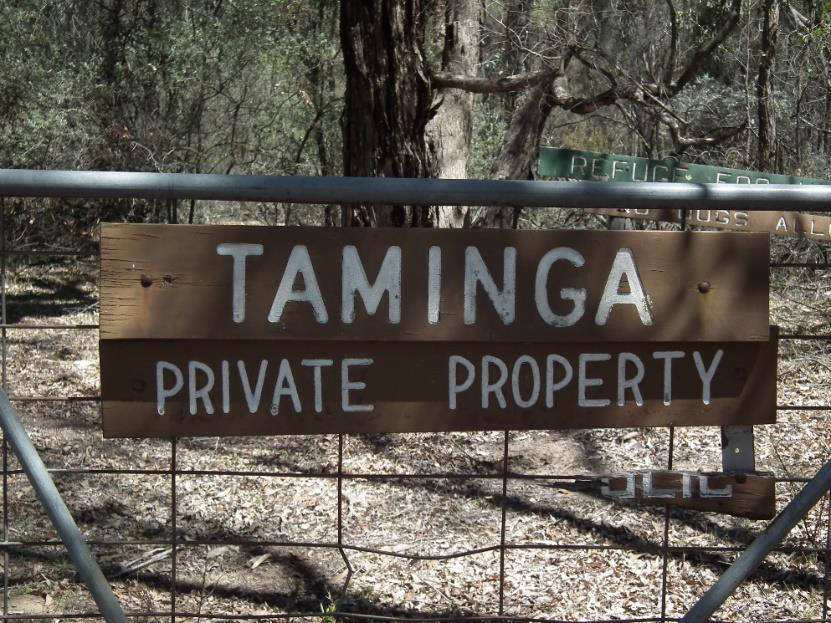
In 1976, Sid moved to his 200-acre property called “Taminga”, at Growie Gulf, near Rylstone. His home was a bush hut with three rooms and a verandah. With no electricity, an open fire kept him warm and cooked his meals. Sid shared his home and property with the wildlife, and hand-reared many orphan kangaroos. They were his family.
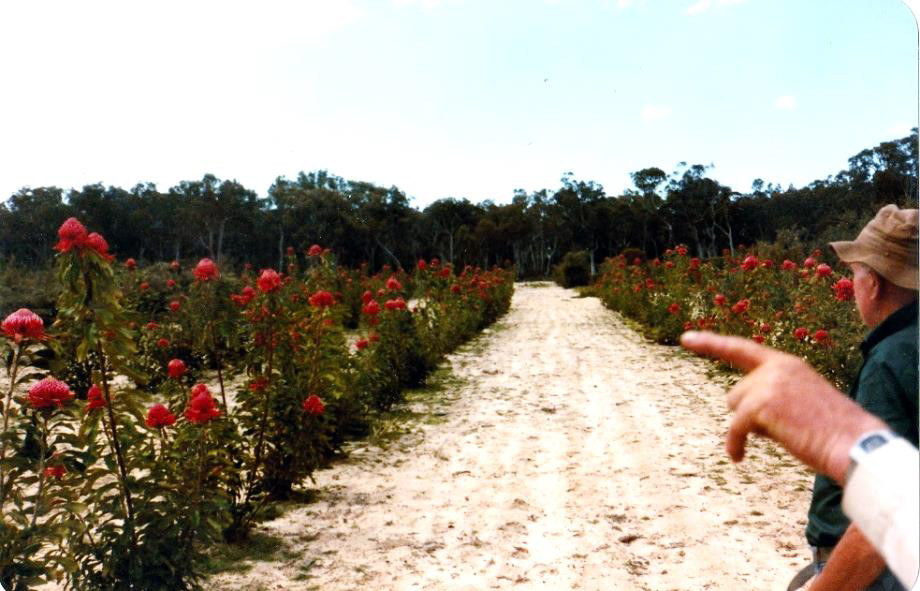
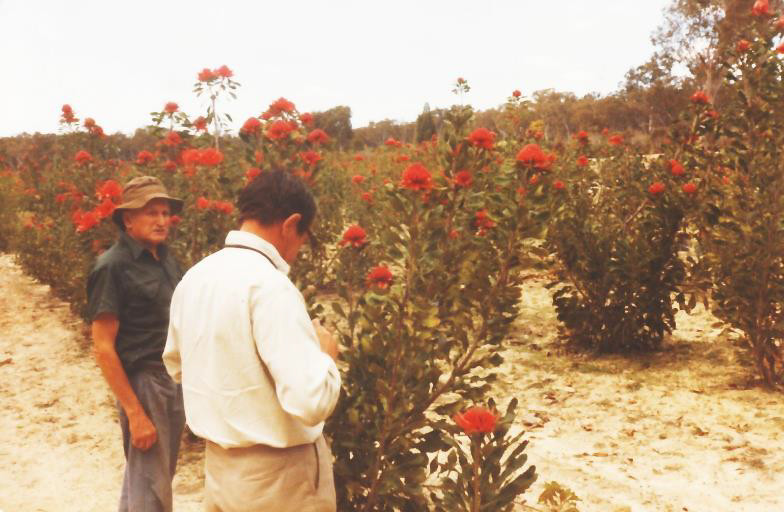
“Taminga” was a wildlife sanctuary. Sid planted many acres of Waratahs, and sold the flower and seed for which he was known Australia-wide. He planted many rare native plants and named Grevillea “Taminga” after his property. Since he died in 1995, Sid Cadwell’s property has been passed to the National Trust.
Sidney James Cadwell – Conservationist – 1912-1995
Our Uncle
He was born a son of Kenthurst,
to a family on the land;
From an early age, he earned a wage,
he worked that farming land.
He bought a farm at Annangrove,
his home was a large tin shed;
He cared for orphan kangaroos,
and Grevilleas he had bred.
He wore a floppy canvas hat,
and trousers held with rope;
His feet were shod with leather boots,
he was a dinkum Aussie bloke.
He built “Boongala Gardens”,
a nursery of some fame;
He grew Australian flora,
a Grevillea bears his name.
He had seen some rugged country,
and walked the thickest scrub;
He had crossed some sandy deserts,
in search of that rare new shrub.
Then he moved to Rylstone,
he crossed the Great Divide;
His hut was built of stone and mud,
His roos were by his side.
We always will remember,
those Waratahs he grew;
And always speak with fondness,
Of this man that we once knew.
Malcolm W. Johnston
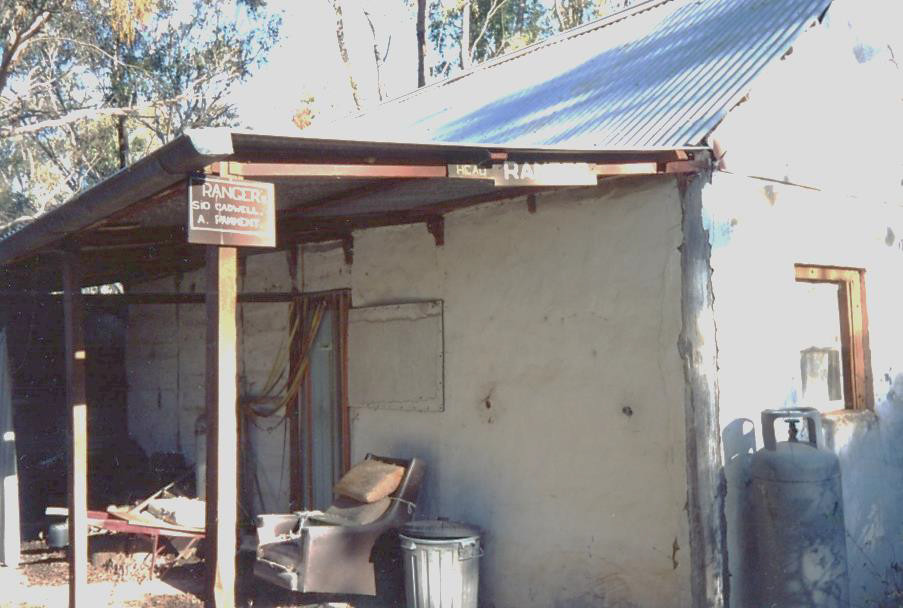

Sid designed this teat to fit a milk bottle to feed baby kangaroos and other baby animals.

Growing Waratahs
Ian Cox
In the last Calgaroo (April 2025), Grahame Forrest told us about his failed attempts at growing the NSW Waratah (Telopea speciosissima), and asked members for advice. None has been forthcoming.
I, too, have trouble growing Waratahs, and have given up. So, what should we do?? Look up Google, of course!
This is what ‘reliable Google’ says:
Botanic Gardens of Sydney
Partially shaded with morning sun is best, although Waratahs will grow in full sun.
In the Southern Hemisphere, Waratahs will not survive on south-facing walls. Transplant in autumn to a wind-protected area if needed.
Waratahs are poor competitors and will not perform well close to most eucalypts.
Gardening with Angus
Waratahs grow well on sandy loam with good drainage, and with supplementary watering if conditions are very dry.
They like good airflow around them, so don’t place them too close to other plants.
Plant in light shade or half shade. pH level should be acid to neutral.
Gardening Australia (Costa)
They like a nice protected position away from the hot western sun and wind.
The soil needs to be constantly moist, but well-drained and acidic. They can be grown in crushed sandstone.
Only use native fertiliser with little or no phosphorus.
If you get some blooms, do a little dance and congratulate yourself, because that’s a great achievement!
Australian National Botanic Gardens
Waratahs appreciate a friable soil of good texture. The incorporation of a rich leaf compost or similar material is beneficial. If other soil is added to the site, always incorporate it into the existing soil. Do not excavate a large hole and then fill it with a good soil mix, as water will accumulate in the hole, resulting in wet feet and probable plant death.
Good drainage and aeration are essential, and if possible, should extend to a depth of 45 cm. Drainage can be improved by building a raised bed or mound. If this is done, be sure to break the existing soil where the mound is to be located so that the new soil can be incorporated with the existing soil.
Watering can be carried out during hot or dry spells. Never let the soil dry out completely. Over-watering in heavy soils will cause waterlogging.
Waratahs appear to be adaptable to various situations, but a semi-shaded position or at least shade from afternoon sun is desirable.
Mulch the surrounding soil to a depth of 5-6 cms. This will help to keep the soil moist and keep the surface roots cool. Mulch also helps to prevent weed growth in the vicinity of the plant. If weeds are allowed to grow, they provide direct competition to the plant for nutrients and water. Removal of weeds may also disturb the surface roots and result in setback of the plant.
Plant where it can receive plenty of air circulation and room in which to grow.
* * *
Grahame has clay soil, so the above advice probably hasn’t helped him much. But the strange thing is that I have sandy acidic soil, and Waratahs grow naturally in the next gully to here. But they still die when I plant them!
What will I do? Hmmmm . . . should I try again, using some of these Google tips?
I’m not sure yet.
Mount Banks Revisited
Ian Cox
Photos Lesley Waite

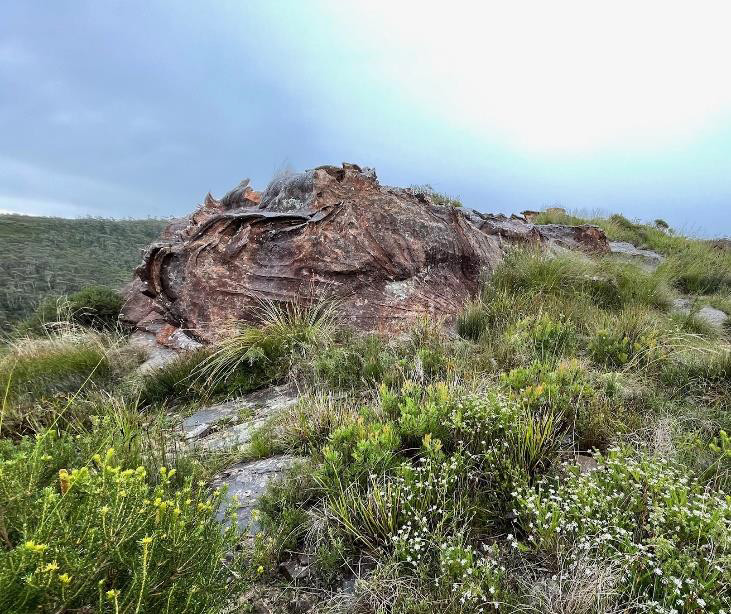
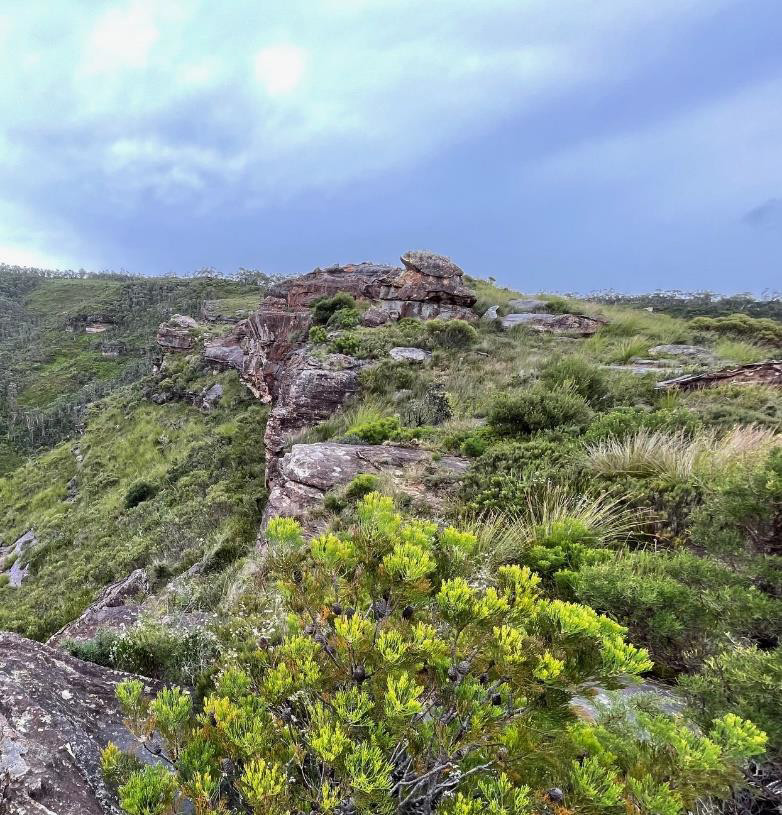
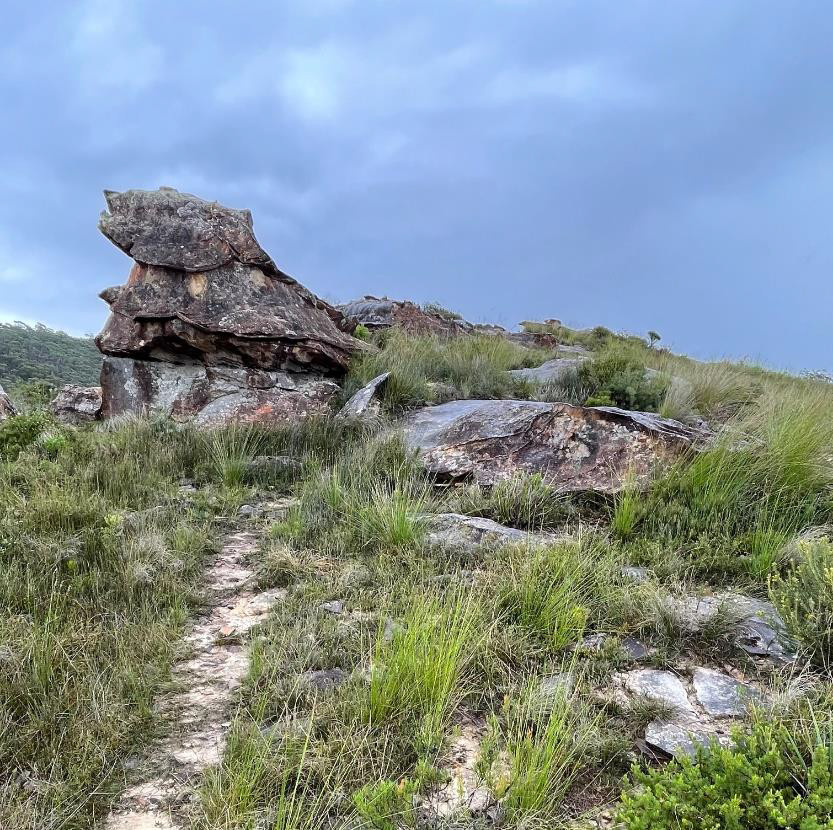
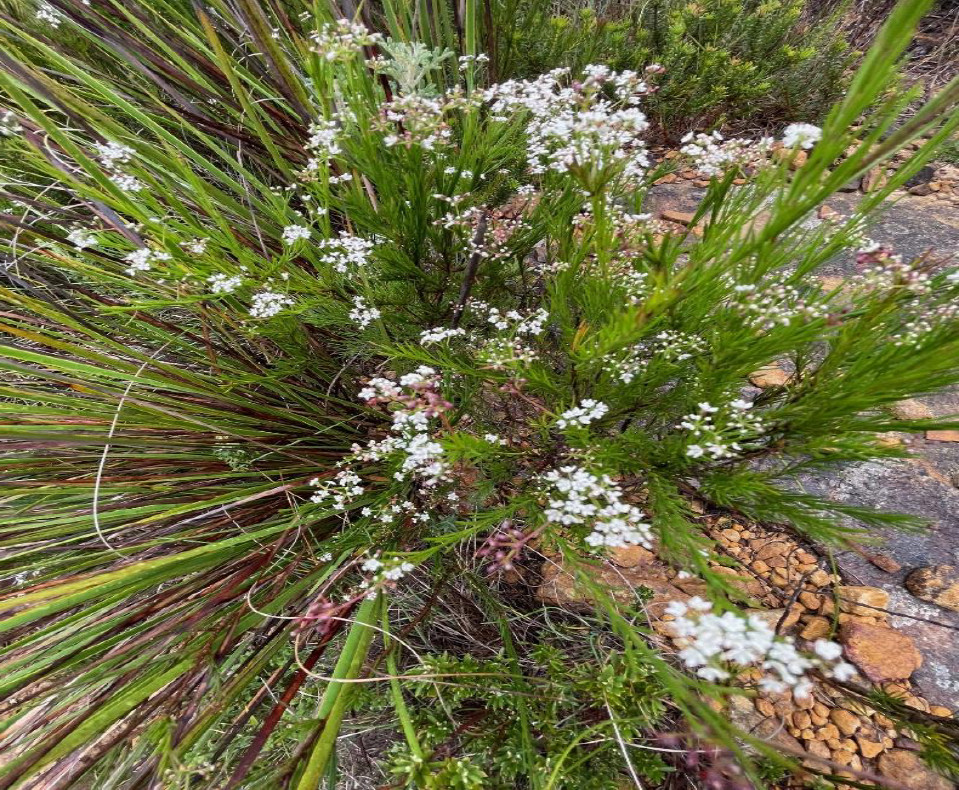
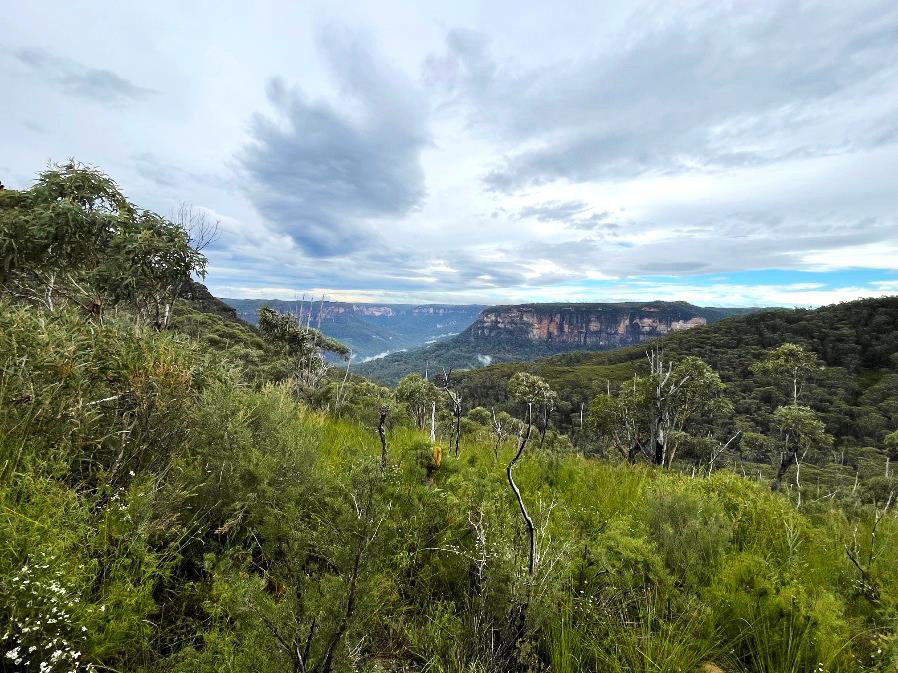
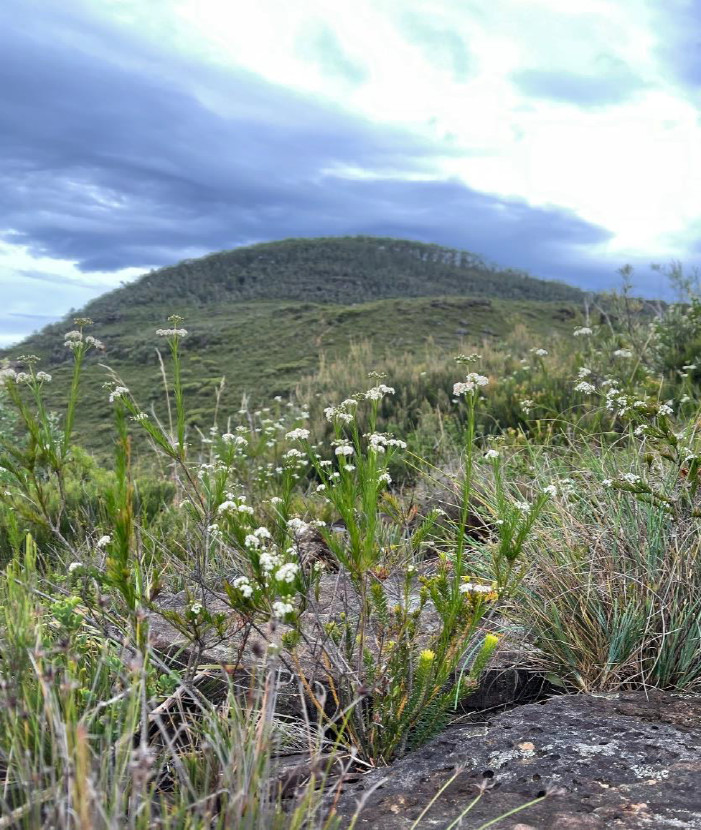
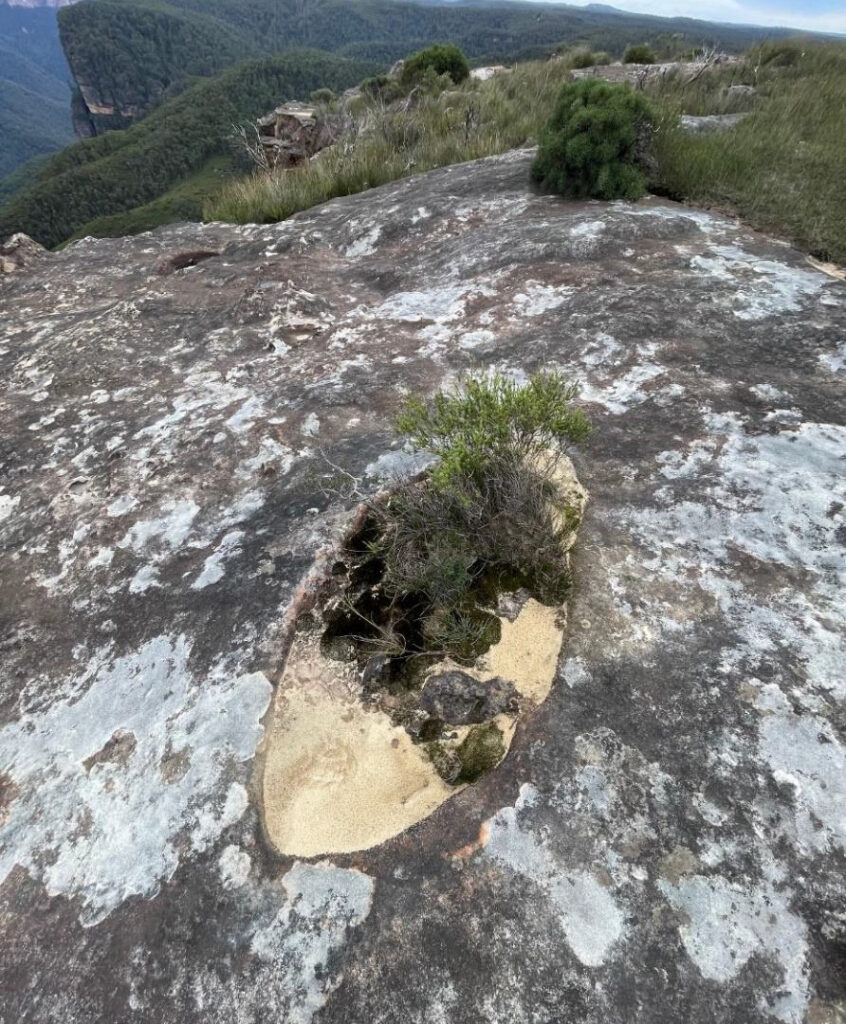
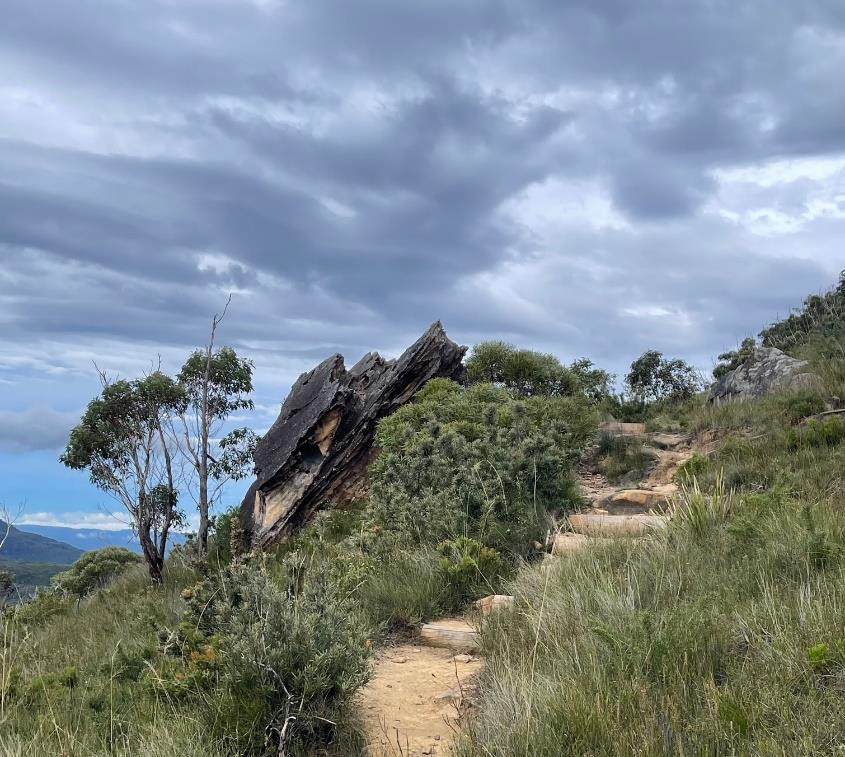
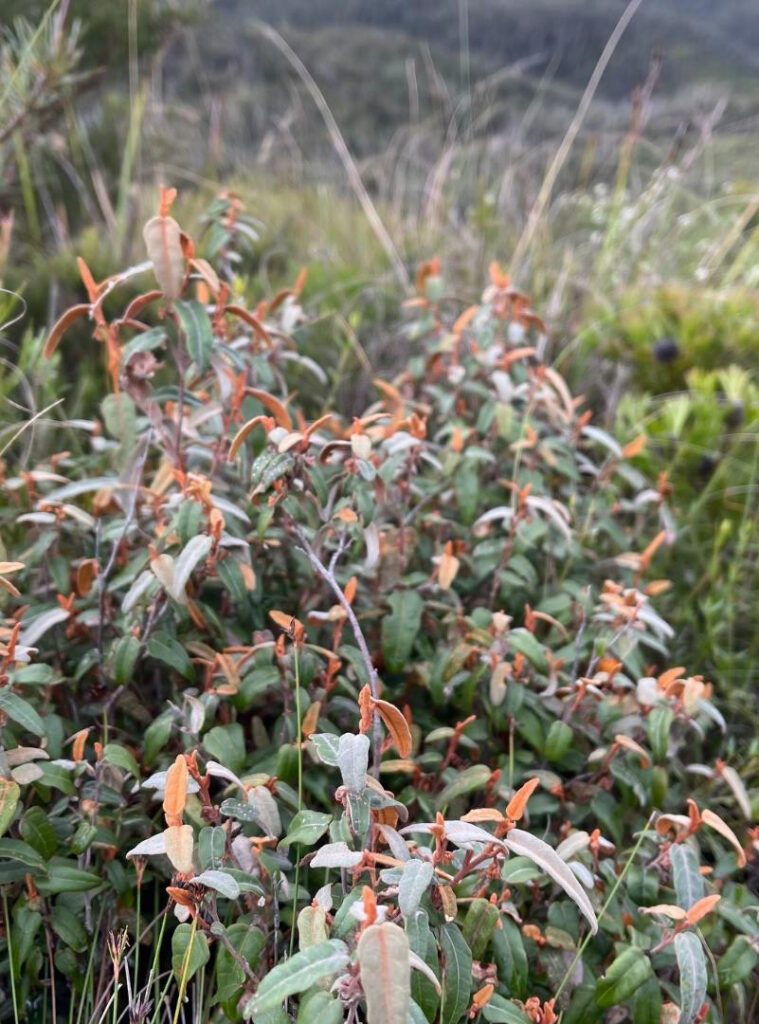
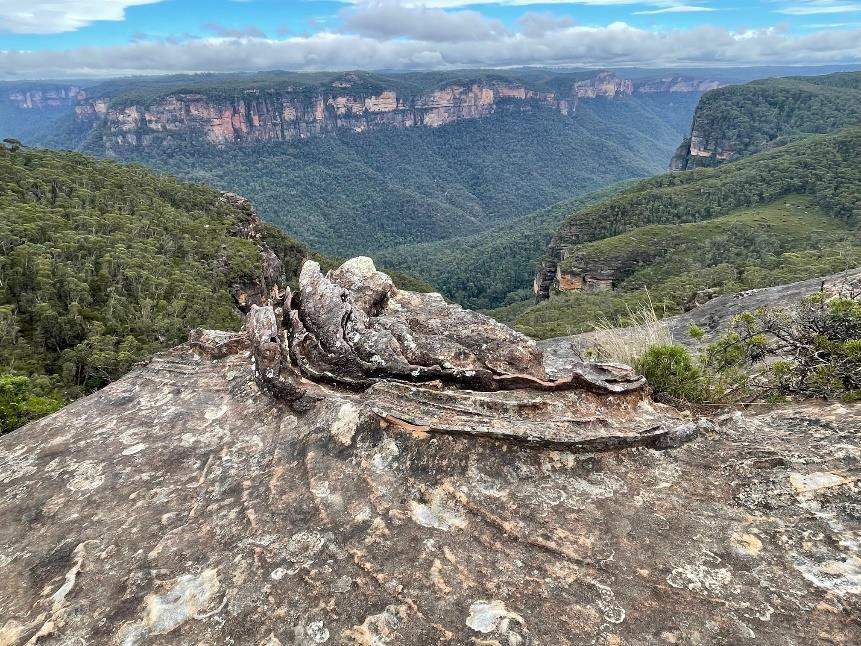
On 21st March 2025, Lesley Waite and I travelled to Mount Banks, intending to be totally immersed in nature for the day. And we certainly were!
The weather was a question mark today – it rained until just after we started walking, and then it stopped. Lucky us!
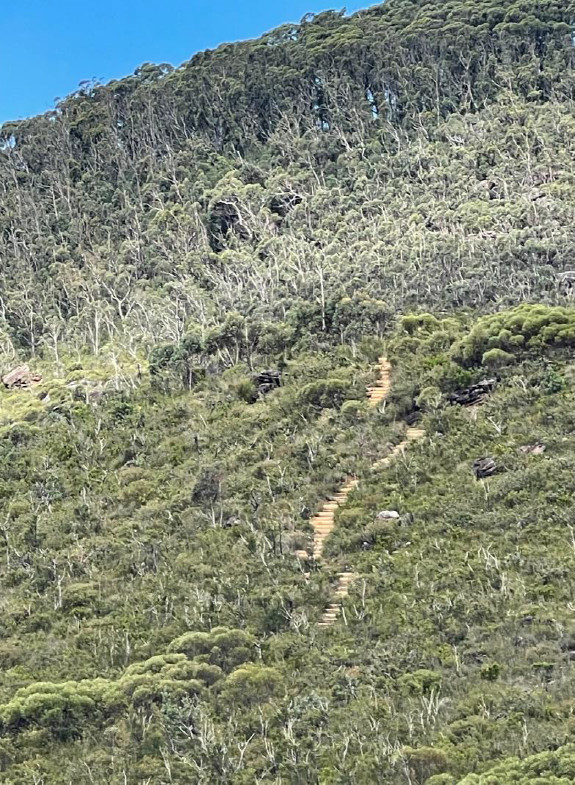
As you climb, the views keep getting better and better, and you can’t stop looking back. In the open areas that get cold winds and snow, the plants are dwarfs. But they are thriving. It seems that almost every square inch of space is occupied. The fire was five years ago, and now there’s full recovery. The low heath is dominated by the Proteaceae family, such as dwarf Banksia serrata less than a metre high, Hakea dactyloides, Hakea salicifolia, Hakea teretifolia, Isopogon anemonifolius, Lambertia formosa and Conospermum taxifolium.

We were enthralled watching two raptors performing aerobatics in the skies above us. They didn’t waste an ounce of energy. Relying on the air currents, gliding, zooming up, dropping vertically to get a closer look at something on the ground, they were in total control. Enjoying life to the fullest. Amazing birds!
he National Parks has done lots of work repairing the track to the summit of Mount Banks after flooding and wash-aways. The track was closed for a considerable time.
Near the summit, the vegetation changes to thick forest and understorey due to the rich basaltic soil. We did venture into this, but because it was so wet and overgrown, we didn’t go far.
For the write-up of one of our previous visits to Mount Banks, click here.
Here’s more of Lesley’s wonderful photos . . .







Lizard Lounge Habitat Garden
Grace Lonergan – Bushcare Officer, Sutherland Shire Council
From The Bushcare Bulletin April 2025
Joseph Banks Native Plants Reserve in Kareela is home to an array of native flora and fauna, including many species of skinks, geckos and other small reptiles. To further support these native lizards and the insects they depend on, Bushland Unit members Grace Lonergan and Polly Simmonds are excited to introduce the lizard lounge habitat garden – a specifically designed space that provides shelter, food and ideal basking conditions for these essential members of our local ecosystem.
Why create a lizard-friendly habitat?
Lizards play a crucial role in maintaining a healthy ecosystem. They control insect populations, aerate soils, and serve as prey for birds and larger reptiles. However, habitat loss, urbanisation, and predation by domestic animals have put pressure on many lizard species. By creating a lizard lounge, we can provide a safe space where lizards can thrive, helping restore balance in our local environment.
Key Elements of a Lizard Lounge
Designing a lizard-friendly garden requires a combination of shelter, food sources, and sunning spots. Everything we used was either brought in by volunteers or was second-hand materials, nothing brand new. Here’s how we created our lounge at the gardens.
Rocks and logs for shelter – Lizards need cool, shady retreats to escape from predators and the heat of the day. We placed flat rocks, fallen logs, hollow branches, terracotta pipes/pots, large boulders and large pieces of shed bark.
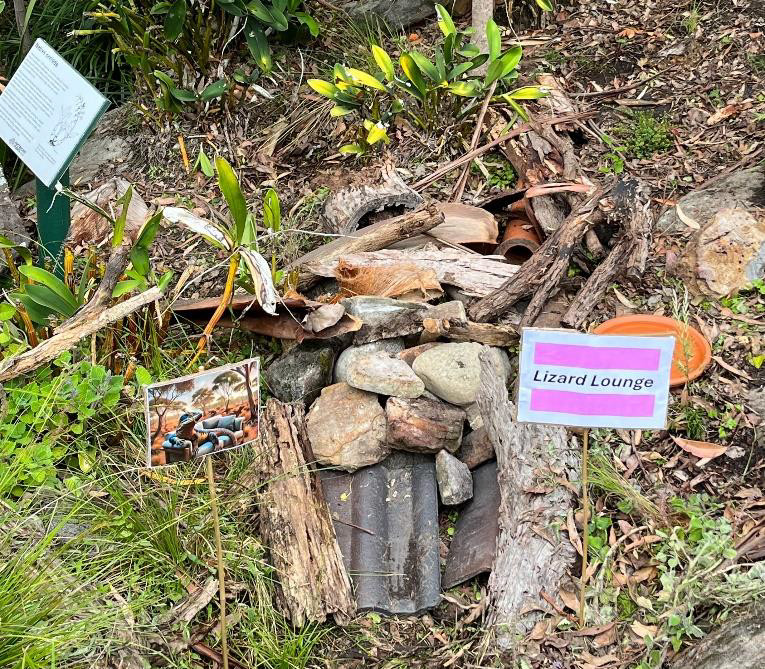
Native plants for food and protection – A selection of low-growing shrubs, grasses and ground covers were planted to provide food, shelter and nesting areas. Species such as Goodenia ovata, Hardenbergia violacea, Dianella caerula and Viola hederaceae were planted for their insect attracting qualities. The species that provide berries and seeds as a food source we planted were Austromyrtus dulcis, Themeda australis, Carex appressa, Kunzea pomifera and Eustrephus latifolius.
Mulch and leaf litter – We chose a spot in the garden that had a layer of leaf litter and mulch throughout the area, because it creates a rich habitat for insects, worms and other small critters – ensuring a steady food source for local lizards.
Water Sources – A small, shallow water dish added to the lounge provides hydration for insects and attracts beneficial insects like bees and butterflies.
Keeping the area safe. To ensure the success of the lizard lounge, we ask visitors to be mindful of the habitat by keeping pets away from the area – dogs and cats are major predators of small reptiles. Respect the natural setting and refrain from removing rocks, logs or plants and give the lizards their space, so as to not scare them out of the area.
Together, we can create a thriving environment where native lizards and insects flourish, making Joseph Banks Native Plants Reserve a true wildlife sanctuary right here in the Shire. Let’s give our scaly friends the ultimate lizard lounge to call home. If you decide to create your own lizard lounge, please share your photos with us on the Facebook group – Sutherland Shire Council Bushcare Volunteers
To read the full Bushcare Bulletin for April 2025, please click here.
The Starfish Fungus
Kevin Mills
From Budawangia March 2025
Strange red and smelly things are starting to appear in garden mulch this month. The Starfish Fungus Aseroe rubra is in a group of fungi appropriately known as stinkhorns.
The unpleasant aroma and gooey mass on top of the fungus is designed to attract flies and other insects to spread the spore far and wide. The insects eat the spore and later passes through the insect in a new location.
Judging by the flies around this specimen seen at Jamberoo, this is a very successful strategy.
Brush Farm Park Walk
Saturday 26 April 2025
Jennifer Farrer. Photos Jim Nash
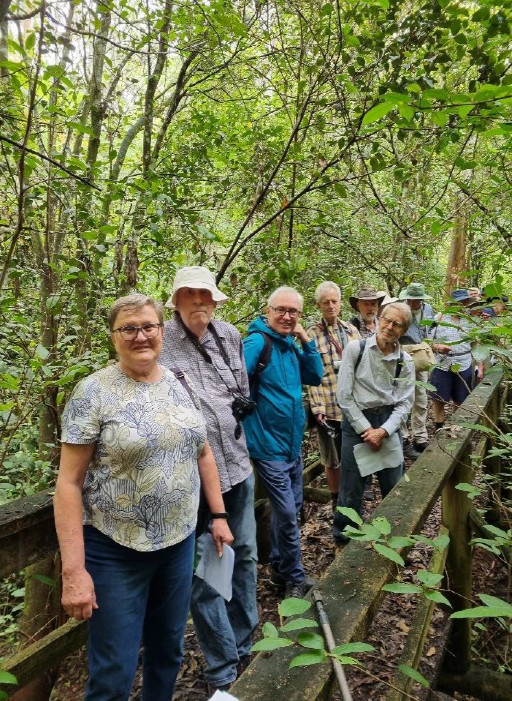
Rain was forecast, but it didn’t deter 16 members and friends from coming on our first walk for this year. As it turned out, there was no rain, just Autumn sunshine.
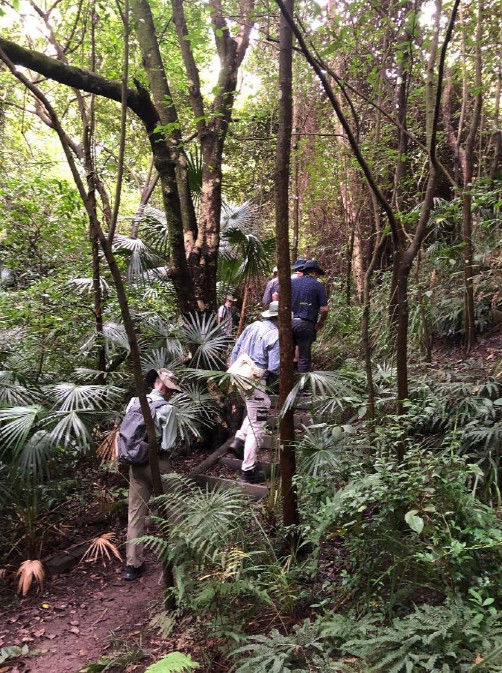
Brush Farm Park in Eastwood, with the garden surrounding the historic house across the road, is all that remains of Gregory Blaxland’s estate, which stretched to the Parramatta River in 1820. At the start of the walk, we admired two trees which have survived the land clearing for his crops and orchards – a magnificent Sydney Turpentine (Syncarpia glomulifera) and a stately ironbark (Eucalyptus paniculata). These trees are remnants of the Sydney Turpentine Ironbark Forest, once common on the ridgetops.
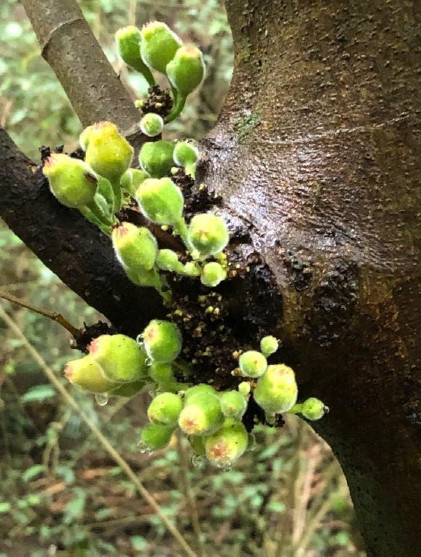
The track then descended into a valley of rainforest species. In the 19th century, “Brush” was the word used to describe rainforest. The dominant trees are Sandpaper Figs (Ficus coronata). These are a creek tree named after their rough leaves, which Joseph Banks observed Aboriginal warriors using to smooth their weapons at Endeavour River in 1770. The fruit is borne on the main trunk of the tree as well as the branches. This is called “cauliflory”.
Climbing through the trees were vines such as Cissus and Passiflora, and on the ground were many different ferns – three species of Maidenhair (Adiantum), Water ferns (Blechnum) and Rasp Ferns (Doodia aspera).
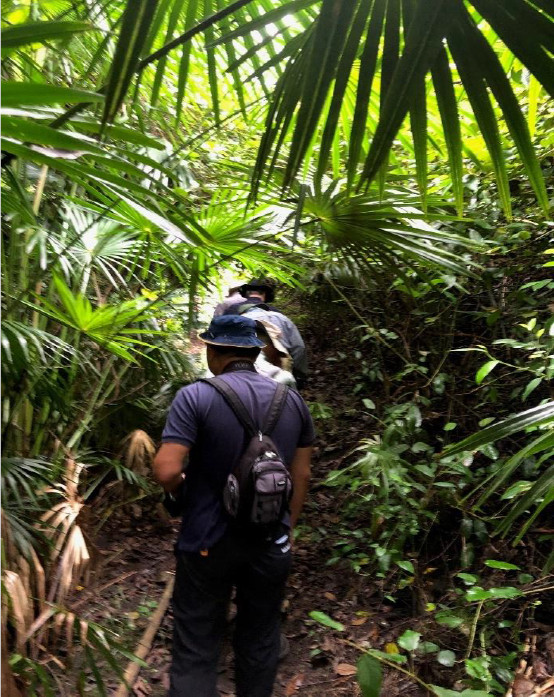
Another common tree growing in the valley was Cabbage Tree Palm (Livistona cunninhamia). At the time of European settlement, these were common in Sydney’s creeks. However, they were soon cut down for building material and to cook the growing tip as a vegetable – hence the common name. It was lovely to see so many flourishing again here.
It was a different experience for members to find and identify rainforest species. Between us, we identified 45 different species.
Many thanks to Tony Maxwell for preparing the plant checklist and to Daniel MacDonald, James Indsto and Jeff O’Neill for sharing their knowledge with us.
Share your stories . . .
Your contributions to Calgaroo are always welcome.
If you have interesting observations of plants in the garden or the bush, photos, or any other news, please send them to me at itcox@bigpond.com for the next edition.
* * * * * *
In the spirit of reconciliation, we acknowledge the Traditional Custodians of our Country, the people of the Dharug Nation, whose cultures and customs have nurtured, and continue to nurture, this land since time immemorial. We honour and celebrate the spiritual, cultural and customary connections of Traditional Owners to Country and the biodiversity that forms part of that Country.
* * * * * *
Page 19

Parramatta and Hills District Group
SECRETARY: Jennifer Farrer apsparrahills@gmail.com 0407 456 577
EDITOR: Ian Cox itcox@bigpond.com
Join us on Facebook here
Join us on our websibsite here